Bringing AI to Super: Australian Food Super’s New Member-Friendly App and the Future of Advice


#33. Australian Food Super’s Dan Mosson and InvestStream’s Gary Bryan join Neil and Sarah to dig into the realities - not just the AI-pilled promise - of using AI to make super advice genuinely usable for everyday Australians.
Most digital super tools feel like bland calculators or force members into a Woolworths-like DIY experience, making the complex even harder. Australian Food Super wanted not just self-service, but truly member-friendly advice, especially for a membership base often new to the Australian workforce or with limited financial and language literacy. Their answer was a new app, built with InvestStream, that uses conversational AI layered over robust, regulated mathematical models turning intimidating jargon and forms into real conversations, accessible explanations, and actionable choices.
Highlights
- Why regulated industries like super can't just 'plug in' chatbots and hope for the best—instead, they need compliance-first, auditable tech with tight guardrails.
- The strategic advantage: Smaller funds, with less bureaucracy, can innovate faster and co-design tools to genuinely fit their members, not just copy what’s easy.
- How conversational AI, when used right, isn't about replacing advisers, but making complex calculators accessible, demystifying concepts, and driving real outcomes for ordinary Australians.
- The ongoing balance: Surviving and thriving with regulatory ambiguity, and making member-first innovation work while waiting for clearer guidance from ASIC or APRA.
Who should listen:
- Fund executives and trustees at smaller/boutique superannuation funds looking to use tech to leapfrog larger competitors.
- Product, member experience, or digital leads wrestling with how to use AI without compromising compliance or trust.
- Anyone in regulated financial services seeking practical, first-hand lessons on deploying chat-driven digital advice—without the “wild west” risks.
"It's easy to set the tool to deliver to the guardrails. It's hard when you don't know where the guardrails are going to be."
—Dan Musson, Aus Food Super
Timeline
04:07 Introducing AI at ASFA Conference
07:41 Developing Financial Modeling Processes
12:45 Discussing AI Regulation and Trust
14:20 Regulation lagging behind technology
19:20 Simplifying complex legal info
21:48 Understanding member concerns with super
24:59 Testing product ideas with feedback
29:09 Developing compliant insurance conversations
32:21 Embracing innovation and risk balance
34:39 Rethinking superannuation industry challenges
39:31 Improving member support and resources
40:34 Future plans for member-focused tools
Guests
Dan Musson, chief experience officer at Australian Food Super
- Connect with Dan on LinkedIn
- Follow Australian Food Super on LinkedIn
- Visit Australian Food Super website
Gary Bryan, chief product officer at InvestStream
Mentioned in this episode:
ChandlerCX Internactive Statements
It’s annual statement time for superannuation funds and ChandlerCX is busy developing interactive statements that are engaging personalised microsites for members. Think of it like Spotify Wrapped for superannuation. Visit https://www.chandler.com.au/add-ons/interactive-statements.
00:00 - Untitled
00:00 - Exploring AI in Super Apps
03:21 - The Evolution of AI in Financial Services
11:36 - Innovating AI in Financial Services
27:57 - Navigating Regulatory Challenges in Financial Advice
36:42 - Innovative Thinking in Superannuation
Neil Benson
Have you ever wondered what's going to happen when AI jumps into our super apps? G'.
Dan Musson (AusFoodSuper)
Day.
Neil Benson
It's Neil here on that super show. Today, Sarah and I grill Dan Mousson and Gary Bryan on Aussie Food Super's bold AI powered advice rollout.Think chatbots, compliance, woolies, analogies, and why a boutique fund is beating the big guys to the punch. Let's go. Welcome to that super show, the podcast where we talk about all things super from the inside.Hi, I'm Neil Benson, Chief Product Officer at Chando cx.
Sarah Penn
And I'm Sarah Penn, CEO of Mayflower Consulting. Each week we unpack what's changing in the industry, what funds are wrestling with, and how tech and regulation are shaping the landscape.
Neil Benson
Sometimes we bring in expert guests, but mostly it's just us having a real conversation about how super is working and what could make it even better.
Sarah Penn
Let's get into. Well, hello everyone and welcome to that super show. Neil, how are you going?
Neil Benson
I'm great, Sarah. How have you been?
Sarah Penn
I am very good. We're very excited today to have two guests. First of all, we've got Dan Mousson who is the Chief Experience Officer at Australian Food Super.We might get him to tell us first about what we're talking about today, which is how did you come to be launching an app that actually is customer friendly? What were you thinking?
Dan Musson (AusFoodSuper)
That's an interesting way to think about it, Sarah, but it's exactly how we started thinking about it, which was really a couple of years ago.We started on a journey, as most did, around the retirement income covenant in the super space and trying to work through the various elements of that. We'd done a piece of work really to improve this, what we call the static information that's available to members.So the things that are available on websites which are allow people to download information and broad calculators.And our next step was to sort of look to a more scalable general advice model before we sort of started to support the broader personal advice framework in the future.But in looking at that, we couldn't really find anything that really looked more than just a set of tools that an advisor might use, but a sort of self service model.
Sarah Penn
Yeah, right.
Dan Musson (AusFoodSuper)
And so we started to look around the market to see if there was a better way to do it.
Sarah Penn
Cool. Which brings us to tell us how that market's going.
Dan Musson (AusFoodSuper)
Yeah.So we came across investream and what they were doing is bringing breaking down the barriers between the complexity of sort of retirement models and adding a conversational layer Using artificial intelligence to be able to enable members to engage from a standard exercise of sort of getting information one way into something that was a little bit more dynamic and allowed them to do different scenario testing, but in a way that reflected the needs of our members. And our membership is largely first time workers or first time workers in Australia.And so their financial literacy and often English literacy are challenges that we as a fund continue to try and find ways to bridge that, that gap. And this was an amazing tool that enabled us to do that both in English and in the future we'll be able to do it across multiple languages.
Sarah Penn
Very cool. Which brings us to investream. So we have Gary Bryan here today, who is the Chief Product Officer at investream.Why don't you tell us your side of the story?
Gary Bryan (InvestStream)
Great to be here and thank you very much for having us. We wanted to do something a little bit different, really the option was how do we actually bring financial services?How do we make those accessible to the everyday Australian? So it was, it was a pretty, pretty straightforward problem to solve. Right.We were very fortunate in the sense that at the time, you know, nascent technologies around AI were starting to really take off and really present a new opportunity for how you could create this type of service for this type of industry. But what we also knew is that, you know, overcoming some of the hurdles of there is obviously highly regulated. It's a sensitive topic.There's a whole lot that sits within the financial advice space that is just so quintessentially important to the experience. But we wanted to do that in a really conversational way.So we took the decision of having built complex professional financial advice tools in the past. In the prior life, we made the decision that this time we'd flip the script on its head and we'll start at the member experience at the end investor.So how can we give them the best experience? AI is part of that and we can talk. I'm sure we'll be talking about that more as we go through the conversation today.But, but really the option there was how do we give the member those same tools that the financial advisors have had for the last 20 years? So that was the genesis of the idea. How do we bring advice and make it accessible to everyday Australians?
Sarah Penn
And how did you guys meet? Was there like a meet cute, as they say? Like, was it at a, did you lock eyes at a conference or.
Gary Bryan (InvestStream)
It was at meat stock, wasn't it? No, I'm kidding.
Dan Musson (AusFoodSuper)
It wasn't at meat stock. Actually, I think it was at An ASFA conference, we saw the team present for the first time.We'd had some conversations leading up, up into that, but it was a demonstration at ASFA where we had a number of our board members who were able to attend as well. And that sort of bought the vision to life for everyone to see what we were talking about and sort of made it something a bit more real.I think the really interesting thing about this is everyone gets caught up on the AI component. And that's cool, because AI is cool, it's doing amazing things.And depending on what research you read, something like 56% of adults in Australia have used it in the last month for something. Or you go into your web browser now and there's an AI tool that sort of pops up as the native way that you.So this is an experience that we're all experiencing, but we just wanted to bring it into the super space.But the real power of it is not the cool nature of the conversational way that enables members to engage, it's that it connects to really sophisticated models at the back end, but in a way that makes it accessible and for our membership, that was really the big problem we were trying to solve, is we could put all the calculators in the world on a website and then you're forced to do what I called the sort of woolies treatment, where you have to come in and scan and pack your own groceries sort of thing. And that becomes a bit tiresome if you've got a.It's all right if you're doing something quick, but it's a bit tiresome if you've got the big weekly shop on. So in the same way, we wanted to make it not so much taking the planner's job off them and sort of getting you to do the planner's role.We wanted it to be something that just bridged the gap between, you know, what is really important information, but personal information in a way that enables you to sort of get some really good, I suppose, indications of what's happening and enable you to make really good decisions.
Gary Bryan (InvestStream)
I really like the woolies example you used there, Dan. I might have to borrow that one.I'm personally convinced that people don't wake up in the morning, jump in the shower, they're not washing their hair, going, today I'm going to ring my super fund and have a concessional contribution conversation. Like, I don't think that people think that way. So really they might be thinking, oh,.
Sarah Penn
My God, today I have to try and ring my super fund to try and Get a hold of someone to try and work out this thing that someone's told me about called a concessional something or other.
Gary Bryan (InvestStream)
Exactly, exactly. So people want to talk in their own language, right? They don't necessarily understand all of the jargon.
Sarah Penn
No, absolutely not.
Neil Benson
Gary. One of the reservations I have, AI is associated with large language models, not large mathematical models.I'd love to know more about how you're using generative AI capability with the certainty that comes with foundational maths.
Gary Bryan (InvestStream)
Yeah, this is great. I mean, just ask the AI to set a time before you count to 10, those sorts of things.It's interesting, some of the newer models, they're putting in supporting tools around it to allow the models to be able to do that. But fundamentally it's not the model doing half of those conversations.But you're right in raising this because I think AI represents a really interesting opportunity for the industry and probably the whole world as far as it'll be transformational, where yet to see what the outcomes will be. But the reality is, from this industry, again, it's regulated. You can't just have AI doing its own thing.You can't just get one of the popular models, plug it into an existing service and hope for the best.And as you've rightly identified with the deterministic nature of financial advice, you want to make sure that you've actually put the right guardrails and governance processes in. And that's only part of the tip of the iceberg, really.So what we did from the outset is understood the fact that the model is going to be fantastic at the language side of it, the conversation.These models are also relatively sycophantic, which I'm sure people have experienced, whereby you say certain things to it and you always get a great response. And they're very good at pumping you up. But the reality is, don't let them do the math. Don't let them do the decision making. This is my opinion.Of course, others will have difference. But the reality is we wanted to create that sophisticated financial modeling experience behind the scenes.So deterministic and stochastic models is what we've built. We call it sugai.And the intention really there is to make sure that we've got an audited set of financial records that you're able to hand to the AI and say, AI, these are the things you're allowed to do, but the AI is just orchestrating the actual models that sit behind the scenes. So it is a very different proposition here. And the other thing is you don't want to have multiple tools as well.So we made the decision early on, Dan rightly said at the outset of this, of, you know, exploring the different digital tools, putting them on the website, those sorts of things from the calculators. I mean, super funds have been doing this for a very long time. I think it's fantastic.What we wanted to do is have that experience that meant the tool started right at the member, in the member's hands, and then right through to complex financially advice scenario.
Neil Benson
So it's the same kind of conversational AI driven layer on top of the proper tools that you would expect a planner to be able to use. But that generational piece makes it accessible to members so you don't have to. Okay, gotcha.
Gary Bryan (InvestStream)
And that's really where the magic comes in. Like the conversational thing. Everyone loves the conversation, right? That's the exciting bit.But from a technologist perspective, behind the scenes I get more excited about how do we make this compliant, how do we put a really good structure in place so that we can watch this thing and make sure it's doing what we want it to. I mean, AI is naturally non deterministic and that's what makes it so much fun to talk to. But you want to put that in a regulated environment.Don't just plug in a popular LLM and hope for the best.
Dan Musson (AusFoodSuper)
And I think it's just worth adding to that.Why that's one of the reasons we were really comfortable working with investream too was their background was in these models that sat in behind financial planning and they were bringing this sort of new interface to the marketplace with that foundational backing, both in terms of the modeling, but also an understanding of the guardrails. And obviously, you know, we were a highly regulated environment and so we just needed a partner that understood that.And, and from the very first meeting it was clear that, you know, our compliance and guardrails were really would come first and then we would fill in the gaps between that with the technology.
Sarah Penn
How did, how did you go with like when you first raised it with the board? We're going to, we're going to put AI in front of all our members.
Dan Musson (AusFoodSuper)
Yeah, interesting conversation. Look, generally I'd say, Sarah, lots of support. Everyone can see this is a way that we're leading into the future in terms of that.And for our fund as a smaller fund in the marketplace, we've sort of put as one of our strategic pillars as our ability to innovate and demonstrate value beyond size. And so from that perspective, it fit in with the strategy.I think seeing it live and having board members attend ASFA and seeing it live was very helpful as well, because it makes the theory reality, you know, and so.And the fact that there was a sense that we could integrate it with our admin platform, which means over time our members will be able to just log into their standard Australian Food super app.They'll see their static information, their balances and beneficiaries and those things, but then they'll be able to move into a conversational layer and actually start to do some scenario modeling, which is not what they'll call it.They're going to ask the machine some questions and they're going to get some answers about the things that are on their mind and they can always come back to those conversations later or they can jump out and execute on a plan that they've come up with.
Gary Bryan (InvestStream)
One of the best things about.I did a presentation to the Australian Food Super Board many months ago now, Dan, but I still distinctly remember we were talking about engagement, general advice and how fantastic it is. And we've solved this conversational layer and it's really exciting proposition. We and the board members, rightly so, went great. What else can it do?And for me, that's when you know you're working with the right group, because these tools exist, people are already using them, like everyone's already going to the Internet for influencers. ChatGPT. There's nothing particularly new in that regard.The newness here is how do you put that in a regulated environment, put the trust around it, which is so quintessentially important. And you can only do that if you're working with groups like AFS who want to see change in the industry as well.
Neil Benson
So the members council, I think this week has published a press release saying, hey, slow down, AI should be reviewed more carefully and the government should step in here and regulate this a bit more tightly. Do you think that kind of caution and desire to put the brakes on these things is appropriate?
Dan Musson (AusFoodSuper)
It's a really good point. I think Gary touched on that, Neil, when he said trying to build it in a trusted environment.So it's all well and good to say we need to regulate AI, but you can only regulate AI in certain regulated environments. And that's where the super industry sits.And so it's actually probably better to engage with the regulated industries, you know, more so than it is, because as soon as you say you can't do that, then it will just find a way to exist outside of that regulation. And so from our perspective, we think we're actually.One of the things that we found in our research that we did with our members earlier this year was how trusted we are to help them with their retirement, with their most trusted partner, even though their engagement in our membership might be quite low for a long period of time.The fact that we are servicing them for a long period of time, that we're looking after their retirement money, we're part of a regulated framework and for us, we service an industry around meat and food production. There's a connection there that they feel that we're highly trusted, in fact, more trusted than going to see an advisor.But we had to put the toolkit with that trust to be able to leverage that so that they can make really good decisions without it.What we've found is these influencers will find a way to get into their phone call or into a message or an email, and all of a sudden they're leading them down a path which may or may not be the right one for them. And this is really just trying to empower them with that information.
Gary Bryan (InvestStream)
I think to add to that, I mean, regulation always takes a while to catch up. And the reality is technology can move at a certain pace, and it always does.Social media became, came and existed well before any regulation was put in place to attract it. And even then, that's only sort of happening in recent times.And the reality is with AI, it's such a nascent technology, it's still so new in the current version of.I mean, AI has been around since the 60s, but as LLMs, where it is right now, I just think the reality is regulators will take time to catch up and regulate these things. I 100% think that they should.I think they should be all over what's happening from a regulatory perspective with AI making sure it's being used in the right ways, et cetera, on the investor inside.We made a very deliberate decision early on to put papers around this, to write our thoughts down, to discuss with independent legal parties, those sorts of things. The intention was very much AI is in there. It's not a huge part of our solution.It's the bit that everyone sees and it's a bit that everyone draws people in, but actually the smarts is everything else that sits behind the solution. So welcome oversight.I think it's absolutely fantastic that governments are getting involved in AI in these areas, because the reality is, if you don't do these things right, AI can be a tool that potentially does nefarious things.
Sarah Penn
Yeah, yeah.
Gary Bryan (InvestStream)
Just like Any new technology.
Sarah Penn
So how are you making sure that it doesn't make stuff up?
Gary Bryan (InvestStream)
Well, that's the best piece. So there's a. There's a bit of secret sauce here as well, which I won't divulge too much.Ultimately, ultimately, you've got to sandbox these environments. So the reality is that when you're using public large language models, for the most part they're black boxes, especially the proprietary ones.You don't have access to model weights, et cetera. You can go to some of the other models, but they have their own challenges.So the reality is you're never going to control all of the infrastructure within that particular element. However, you can put governance, guardrails, oversight.There's plenty of ways you can get AI to work for you in a very narrow kind of on rails, if you will. But it's got the. It's got the feeling that it's not on rails. So what we did is we wanted the conversation to really feel like a conversation.Conversations can go anywhere. Coming back to the analogy earlier, we don't wake up thinking about concessional contribution journeys. We think about, can I retire?Do I have enough money? Should I buy this coffee? All the things that matter to people.So you put that as the input into the models and then you put a whole set of frameworks and capability around the large language model to inform the outputs. Watch what's happening from an output perspective to make sure that you're not going off track. And test, test, test, test, test, test, test, test.
Dan Musson (AusFoodSuper)
Yeah, and I think, and, and again, I hope without sort of unlocking the secret sauce here, this isn't just a front end, it's a back end system. And so we get the ability to review those conversations.The system will highlight if it thinks, you know, there's a conversation that's close to the edge and needs to be reviewed.And the machine learning element of that is when we review those and we approve or deny those, then it sort of continually improves the conversation tone as well as the guardrails and tightens those up. So the more users that are in the system theoretically, the better it will get at delivering those outcomes.
Sarah Penn
Have you seen any good questions yet?
Dan Musson (AusFoodSuper)
We've seen some crackers.
Gary Bryan (InvestStream)
Great ones, yeah. We've had some great questions. I still fondly remember, I think one of the early members asked whether or not if Subram would marry him.And she said, she said, no, I won't. My name's not Marianne. I love this. So that's where the LLMs become really interesting.Because you can have that little bit of edginess, a little bit of spice in there if you wish. But behind the scenes it's a highly structured conversation that's going on and it's got to trigger certain gates, etc.And that's what's been great working with Dan and the team because we can explore this stuff together. You never get the thing right on the first build.
Sarah Penn
Yeah.
Neil Benson
Dan, I'm really curious. Some of the language around superannuation can be pretty daunting. I typed a phrase into Microsoft Copilot the other day outlining the different.
Gary Bryan (InvestStream)
What?
Sarah Penn
What were you thinking?
Neil Benson
Well, what I said was Australian Superannuation's got all these different types of death benefit nominations. There's lapsing, non lapsing binding and non binding. There's reversionary. What is the reading level of that phrase?And it said 18 to 20 on the Fleischmann scale. You need to be a university graduate to understand what you've just written. What I'd just written paraphrased from the Money Smart website.So what it's saying is deathbed are complicated and you need to be a university graduate to understand the language.So I'm curious as to how your members are asking questions, how those are being interpreted and whether the Super Ann, as you call it, is able to chat to them in a understandable language. How do you get it done from 18 to 20 down to a much more easily digestible reading level?
Dan Musson (AusFoodSuper)
I think from our experience what we've seen is a couple of things.So if I talk less about binding nominations and things like that, but fundamentally the mechanic is our knowledge base enables us to take the language that's there and submit in a way that we think is readable to our members.Now, some of these, that doesn't take the complexity of family law out and it doesn't take the complexity around binding and non binding and lapsing and, and all those sorts of things. But it does enable us to communicate and set some frameworks for the system to be able to deliver that conversation in that way.But the other things are really cool in terms of the way that we interact with members is let me take something that's more visual, which is things like returns or investment structures and how they return. So generally what will happen is if you ask a question about that, it will deliver the answer in a couple of ways.You'll see some graphs and you'll be able to see the visual pictures, but also those graphs will be interpreted in that language that we talked about.Whether you're one of those people who needs to see a picture or one of those people who prefers to read the words or a combination of both, then you get those options in the user interface that makes it easy for members to get across that information. And look, as Gary said, we won't get this 100% right on.First run will continue to evolve and as the questions come through, we'll see where the problems are and then we can go back in and start to address the language, if that's the issue.
Gary Bryan (InvestStream)
And that actually touches on a really key point as well here, is that the amount of information that is gathered from these conversations, it's very different to the traditional model.The reality is if someone's sitting on the couch on a Friday night talking to superann retired Smart plus, as it's referred with afs, the option like what people will talk to these tools about, we're yet to really see exactly where they're going to head. Think of it from the insights that super funds in the industry can start gleaning from this information as well.And this is not to break privacy by any stretch of the imagination. It is a regulated industry. We need to be able to see the types of conversations that are happening. It's no different from calling into a call center.But the thematics, and then how do those thematics drive improvements in the core proposition? Like, they're all the fun areas that we're starting to get into as a.
Dan Musson (AusFoodSuper)
I think the other thing I'd add to that is one of the other benefits for us as a fund and part of the retirement income covenant is this sense that we understand what's on people's minds. And that's always been difficult for super funds to do. We've tended to do it in static research or those sorts of tools.This enables us to actually say, well, you know, people like to think about super at 9 o' clock at night and they like to ask these five questions. And these themes that will come through will mean, okay, well, we can start driving our marketing communications.These are the things that are on people's mind. So we can see some people using the app to be able to have that conversation.There must be others out there who aren't on the app yet that need to have that conversation. How do we use that to drive our education and communication to members?And it just creates this ecosystem of information which is really like a live chat. It's a bit like, you know, when you get that send an sms, how was my service?Sort of thing, you know, when you giving those live reports on service satisfaction in the same way this is sort of breaking down what was once a big static piece of research into really bite sized bits of information that are happening dynamically throughout time.
Neil Benson
Are you capturing all that information back into your registry?Can your contact center folks see those conversations that members have had with Retire Smart plus and use that whenever the member calls in maybe to to adjust the contributions or anything afterwards 100%.
Dan Musson (AusFoodSuper)
So the back end that I mentioned there enables our contact center and our CSMs out in the field to be able to look through those conversations, see what people were talking about, where they got up to if they need to do that or also helps them to sort of accelerate the off ramp. So oftentimes it's the follow up contact would generally be I need to do this now. I've had this conversation, this is what I need to do.I want to change my insurance value, I'd like to switch my investment. Then we can swiftly help them through that exercise because they've had those conversations as well.They've sort of educated themselves on where they want to go.They're empowered now to make that decision and then we move straight into service model which is how do we facilitate that so you get the best outcome.I think the biggest challenge with that we found in our research people thought they had a plan but then executing it was the next step and so making sure that we can help that off ramp as well so that it becomes real outcomes, not just conversations.
Gary Bryan (InvestStream)
Yeah.
Sarah Penn
And how do you manage the personal advice versus general information? Yada yada yada. Everyone's least favourite topic. I presume it doesn't spit out an 80 page SOA at any point.
Gary Bryan (InvestStream)
Oh, this is an interesting one.I mean amp put some research out at the end of last year that said one in tender Australians understand that their funds offer intra fund advice and I think it was in the 50 to 64 age group it goes down to 7%. And the better question for me is why do people need to know what an intra fund advice is?
Sarah Penn
I was going to say it anyway. Oh yes, I know what intra fund advice is. Definitely.
Gary Bryan (InvestStream)
I don't know what that is. Yeah, of course, absolutely. Comes back to the earlier point as well.Like are we standing in the shower in the morning thinking about intra funded ice crop? Not so again working with Dan has been good because we've been able to test some of these ideas with the team as well and the members.We've got family and friends that we've put these products in Front of to get, to get early feedback.But the reality is you need to be able to adhere to the regulatory guides, but you also need to make sure that you make that a seamless experience from the end investor or member perspective because at the end of the day they just want a question answered.So really that gap between the personal advice or the guidance style area, sorry, general, or the personal advice which is going into deeper topics, that's just a gating question from the AI and the tooling that we put behind the scenes. It is very much designed from on the Invest stream side that we have built in all of those different boundaries and layers.But the important thing is from the members perspective, all we want to be able to do is just tell them, hey, we're going to have to talk a little bit more complex now if you want that question answered, which means this. Would you like to proceed? Yes or no? Very simple question. And the conversation continues.So we want to educate and inform as we're going, but we don't want to get stuck behind regulation, regulatory terms because that just confuses everyone and we don't end up with a member experience. So yeah, I won't tell you how we did it, but it's been a very deliberate design decision.
Sarah Penn
Oh, come on, there's only four of us. You're between friends.
Gary Bryan (InvestStream)
How many subscribers to the show? A couple of thousand? There we go. No, but in all seriousness, I mean, again, this is where the compliance elements come in.This is where the tooling becomes important. This is where the deterministic nature of financial advice becomes important. Let the LLMs do the conversation.That's the, you know, that's the, that's the fun side of it. But the reality is behind the scenes you've got to have a huge amount of structure.You've got to have off ramps, you've got to have exception management, all of it. You've also got to have it independently verified, you've got to have it well documented.So these tools are much harder to design than what I've found previously.Doing deterministic style, just, you know, the old school, you plug this database into that database and everything works together because I told it to do it that way. It's a very different way of engineering, very different way of thinking.And quite frankly, you do have to put a completely different hat on to design these types of systems.
Neil Benson
Dan, Sarah thinks it's dead. I think it's on life support. But DBFO challenge two, it's certainly in a box somewhere.We hope it's these Light of day, how big a difference would that make?To have that kind of legislative or regulatory clarity on nudging and providing guidance to members, you're obviously plowing ahead trying to deliver something for members. In the absence of that framework, how do you find it?
Dan Musson (AusFoodSuper)
It's easy to set the tool to deliver to the guide rails. It's hard when you don't know where the guardrails are going to be. Why?We sort of started off at the very start of this exercise to really focus on just this sort of guidance, general advice where we know we can play comfortably under our license, but also more broadly, we can build out the competency we need to be able to do the next step over time when that becomes available to us. So I suppose the way that we're looking at it is this will be a leap from where we are today in terms of member experience.So it will unlock the power and the sophistication of those models and put them in the hands of people and hopefully get them to.And that's what we're expecting to see as we go through this exercise, that not just how many people use it, but how many people then go on and do something that will be the true test of whether we've taken a fairly disengaged member into someone who is actually actively doing something. Then that's success.The second part of that is then how do we serve more sophisticated challenges for people and whether that's bringing in other members or household, you know, the complications of personal advice that sort of come together. It's not hard to see where RetireSmart plus and Superam will go in the future in terms of that. It's easy to see that.And in fact, you know, we've been toying with a few different ways that sort of fill a gap in a member's needs, but in a way that's still compliant.We're really looking at the old at risk and how insurance conversations could be delivered through a conversational environment in the same way that you used to with a risk advisor. That sort of, sort of left the market when it got a little bit too complicated and difficult to manage.So, again, there's a gap there about how much insurance should I have at a certain time in my life. We can't give you that information today, but over time you could see that this is possibly something we could lean into.But we just need greater clarity from the regulators about, you know, what is going to be acceptable in that.One of the great things we need to educate them on is that the fact that we record all this information, it means we've got a record of these things that may have one day there might be a call recording somewhere and you can do voice to text.I know, but the ability for us to be able to pull these things out and specifically look at chains of conversation in a managed in way, not just at the output, but in the input. So we set the guide rail so we know where the conversation is going to go and how it's going to be managed before it even happens.But then we can always prove that that's the way that it happened. So it's a. You know, I think that's probably the easiest way to describe it is we can work within any guide rails.We just need to know what they are and we need them to sort of. Ultimately, we need them to be in the best interest of members.And that probably means allowing people to be able to give information and sort of manage the trust and compliance issues on the way through.
Neil Benson
And have you actually had an opportunity to sit down with ASIC and ahpra, show them the tool, walk them through your plan to roll it out and the risks and how you're mitigating those? Or is it just a matter of consulting your legal counsel and hoping you're staying in the right side of things?
Dan Musson (AusFoodSuper)
I think we've done a bit of both, to be honest. We've sort of signalled to the regulator that we're moving in this vein and we've sort of suggested that post our rollout.We'd love to show them some of the information that comes from it. I think that, you know, for us, working hand in hand with the regulator is important.That just requires us to be open and constructive with the regulators and be clear with that. And I know Gary and his team have been working closely with the regulators as well. That was one of the things that was attractive to us.They get the idea of working with regulators as opposed to hiding it away and waiting for someone to ask.
Sarah Penn
Why do you think it's taken until now for someone to take this sort of approach? And why do you think other funds haven't got on the bandwagon before?I mean, like, if you look at the resources, Australian Food super is a boutique super fund, which is what we like to say at our end of the spectrum.Obviously you don't have the absolutely astronomic resources of some of these other super funds, but yet they've not done anything like not done this sort of thing. And you guys have. Why do you think that is? Is it tech or risk or what's going on?
Dan Musson (AusFoodSuper)
It's probably a combination of things, Sarah. One is, I think the technology has become so pervasive now that you can't ignore it. So that's the first thing I'd say.I'd say, yes, in terms of risk, we might have a slightly higher risk appetite than others, but it's probably less about risk appetite and more about less bureaucracy. So as a smaller fund, we're a smaller team, we probably have the same risk appetite as everyone else.To be honest, if you look at our RAS matrix against Australian supers, there's probably not much difference around risk tolerances, but there's just a sense of our ability to move in and lean in onto new innovation.We think it's part of our DNA as a small fund in terms of the value that we bring to the industry beyond managing investments for members in their retirement, is this ability to keep being innovative and demonstrate what can happen.I think as a smaller fund with a fairly homogenous cohort, we've got the ability to do pilots on a national scale, but sort of be seen as a bit more of a pilot state. And I think the other thing that comes into that is we see that our ability to do that, given our size, is to find good partnerships.So whether they're in insurance or administration or in this case with investream, finding a partner that really we can connect with, make them an extension of our team. Then all of a sudden we've got all this additional capacity and capability that we didn't have and here we are, very cool.
Gary Bryan (InvestStream)
Co design, co test, co audit, the whole lot. And it's been great working with Dan and the team because the amount of care that they have for their member base is just wonderful to see.And I appreciate they're a boutique fund, as you describe, so they've probably got a little bit more, you know, front of the coal face as it was, but even hearing about Dan and the team going to, you know, meet stock and all these other things for the media industry, I just think is fantastic. We've actually tried to get a few invites, but he hasn't brought us along at this stage. So maybe in the future.But look, as far as why maybe funds haven't tried these sort of solutions before, I think. I think the industry's been a little bit stuck for quite some time in the sense that there's been a view of what these tools needed to be.There's been a bit of a cottage industry that's erupted around These areas as well.From my humble perspective, having gone to a number of conferences over many, many, many, many years, it's pretty much always talking about the same sorts of thematics. How do we get more people to engage with super, et cetera, et cetera, et cetera.So the reality is you can't keep doing the same thing that you've been doing. It actually creates. And whether you want to call it innovative thinking or whatever the term is, the reality is you've just got to think different.And then you've got to find the people in the industry that align to that vision, align to want to see some change. And you work with them and you partner and you create more of an ecosystem utility for the industry to use rather than creating individual silos.So from an investor in perspective, we're really keen on turning this into an ecosystem for the superannuation industry where you get consistency of calculations across every touch point of the member journey. We've just got to build more of that consistency into the system.I just don't think the technology or the business models have supported that historically.
Neil Benson
I love it. I think you've gone live with your first version while others are still trying to get a business case approved.That just shows the agility that they get. Whenever you're this size and this focused.
Gary Bryan (InvestStream)
Absolutely. And focus is key impact you can.
Neil Benson
Have for your members compared to other funds where a much higher proportion of their members might have financial advisors. And so you can have a tremendous impact upon your member base. Which is. Which is awesome. Gary, I'm interested.Australian Food super is one of MUFG's administered funds and you've recently announced relationship with MUFG. Which came first, chicken or the egg? Was it Australian Food super or mufg? And how do you see that playing out?
Gary Bryan (InvestStream)
I might get in trouble for saying this. We're recording MUFG for a while. Oh, look, it's been wonderful working with MUFG as well.Again, similar to the conversation we've been having, they get it, they see that there's change that's needed this industry, we know that engagement advice. Unfortunately, we don't have enough advisors. We may never have enough advisors to fill the gap.This gap has existed for a very long time, so it needs some new thinking. So this gives us a huge opportunity. But it's not just the digital tool at the front end that matters, it's actually the whole ecosystem.It's a whole experience. Dan mentioned this before about once the member goes through that exercise and then they get to the End of it, what's the action that they took?And everyone will have a different vision of what that needs to be. I'm of the humble opinion that I think it doesn't matter if an action was taken or not. Did the member get what they needed? Tick doesn't matter.They could just come in for some information.So the opportunity that we have with MUFG is to work really close with the registry and embed these tools so that they again become that industry utility. We're advised people behind the scenes, that's what we do. That's our background, and it's just time for a change.So it was definitely a matter of courting both parties at the same time. We're just seeing that who would go first. But definitely having that alignment with AFS back to mufg really helps the story as well.And the work that we've been doing with MUFG today has been great. So I'm very excited to see where this transitions to over the next six to 12 months.
Neil Benson
Dan, you mentioned this is your first rollout. There's going to be enhancements made to the experience for your members. What are they able to do today?What are the next steps and what's your vision for this customer experience or member experience in the future?
Dan Musson (AusFoodSuper)
What we've done is we've invited a small group of members to be early users of the system. It will stand outside of our member app at the moment, and that's been a deliberate choice as the MUFG conversation comes to light.And we'll actually have an integrated solution which we'll roll out through that way. But we didn't want to wait for that to happen to start to get some of the insights that we would find valuable from our members.So that's why we've done what we've done. So we've got standalone apps in both the Google Play and App Store. Members, selected groups of members have been invited to attend.So unfortunately, you can't just go and download it and use it without being part of this group at the moment. And over time, that group will be expanded to cover the member base who have access to the app. That'll do a couple of things.Again, about 25% of our membership from scratch about 18 months ago have downloaded the app, which is fantastic. Tells us that, that they're, you know, that their phone uses and they're interested.We expect that this will help drive that penetration even greater. And over time, it'll be the preferred tool for people to get that, that sort of transactional information or have those conversations.So that will continue to play out.What we've tried to design in terms of what it will do from day one is it'll generally help you with insurance, you know, an understanding of what insurance products are available, you know, what, what our investment options are available.It'll do some calculations for you, it'll do some comparisons of those, it'll encourage you to have conversations, it'll give you information for our membership. One of the, one of the questions that gets asked a lot is around the departing Australia Superannuation program.So what people can do with their DAS payments, how do they get that information?What are the, so all of those sort of helpful tools, some of those will take the calls out of our contact center, whether it's email or calls and hopefully that means it'll create some space for us. When people do call, their basic needs are met in a self service environment.So when we're in an assisted service environment, it's just a much better experience and we can take them on that journey over time. Neil?I mean, I don't know, I have a view that says there's additional layers of support we can continue to build with the investream team and MUFG over time to be able to start to pick out, as I said, some risk advice to help people have conversations about insurance adequacy and what they can do and then do some pricing comparisons about if they do that, what will it cost them and those sorts of things.All those questions now are a little bit opaque at the moment in terms of default covers and you know, how many units of this and all that sort of stuff. So it gets a little bit challenging.So we think there's, there's additional help there that's on the early horizon and in the longer, on the longer term you can see us starting to push into, you know, some intra fund and personal advice spaces as we call it. But whatever that might look like is still, is still really to be determined. But whatever it is, we're going to put the member at the front of it.So whatever that experience, whatever the product or the outcome solution we're looking for for, we're going to start with what does the member need and how can the tool assist that as opposed to how do we get the member to go from here to here?
Neil Benson
Very good, that's very exciting journey. I'm really thrilled to see you embark on it and I really appreciate you sharing it with us today.
Sarah Penn
Thanks very much guys, great pleasure.
Dan Musson (AusFoodSuper)
Thanks Neil and Sarah.
Gary Bryan (InvestStream)
Yeah, thank you for having us.
Neil Benson
Thanks for listening to that super show. We hope today's episode gave you something useful to take back to your team.
Sarah Penn
If you're thinking we should talk, book, we'd love to chat. You can book a meeting with either of us via the link in the show notes.
Neil Benson
And don't forget to follow the show, share it with a colleague, and drop us a line if there's a topic.
Dan Musson (AusFoodSuper)
You want us to tackle.
Sarah Penn
Catch you next time on that super show.
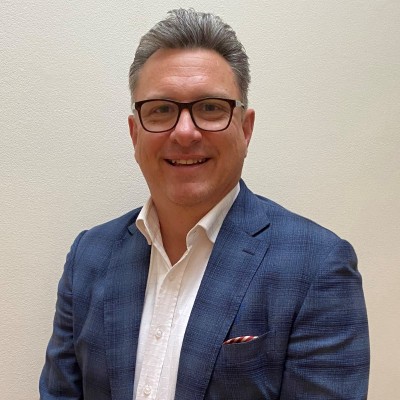
Chief Experience Officer at Australian Food Super
Daniel joined Australian Food Super as their chief member officer in 2023 having previously served in leadership roles in Local Government Super and other organisations in financial services as well as corporate sectors.
Beyond his executive career, he has previously served as President of the Mosman Swans Junior Australian Football Club and as Crew at Marine Rescue NSW – Middle Harbour, where he brings his leadership experience to community service, teamwork in high-trust environments, and a lifelong passion for sport and volunteering.

Chief Product Officer at InvestStream
Gary Bryan is a fintech product leader, AI innovator, and Chief Product Officer at InvestStream, where he helps drive the development of technology solutions for wealth management, trading, and financial services providers. With a background spanning product management, financial technology, and digital transformation, he is passionate about using emerging technologies to simplify complex financial concepts and create better experiences for customers and members.
Prior to joining InvestStream, Gary spent 17 years at Iress, where he progressed from Account Executive to product leadership roles, helping launch and deliver portfolio, trading, and wealth management solutions across Australia and the United Kingdom. His career has been defined by a focus on product delivery, innovation, and translating complex technology into practical business outcomes.
Based in Melbourne, Gary combines deep fintech expertise with a strong interest in artificial intelligence, product strategy, and the future of advice and member engagement in financial services. He holds an MBA from RMIT University and is an active advocate for the thoughtful application of AI in highly regulated industries.


