FSC Chief Breaks Down Government's Consumer Protections and Industry Reform Address


#34. The new era of super legislation: how much is too much—and who pays? Sarah and Neil dig into the government's proposed reforms with Financial Services Council CEO Blake Briggs, uncovering the central tension: how do you craft effective consumer protections after the First Guardian and Shield disasters, without layering on so much complexity and cost that it stifles the industry and confuses members?
The discussion pulls no punches on who shoulders the fallout from bad actors—with good advisers, super funds, and even unrelated sectors picking up the multimillion-dollar CSLR tab for a handful of failures.
Blake Briggs is blunt: unless reforms get costs down, the logic of "spreading pain" through ever-wider levies won’t last. The episode also covers why banks are being deliberately sidelined from the new advice model, the ongoing struggles to police dodgy lead generation and advertising, and the philosophical question of whether we’re training the public to expect zero risk; or shouldering the cost for market events nobody can insure away.
Who should listen:
- Product, risk, or legal leads at APRA-regulated super funds facing a regulatory overhaul
- Anyone working in compliance, policy, or practice management wrestling with uncertainty about CSLR costs or due diligence reforms
- Trustees or directors trying to gauge what the next three years look like in advice, advertising, or member communications
Highlights
04:01 Engaging with industry regulations
09:14 Challenges in Financial Advisory Market
12:16 New rules on financial cold calls
13:43 Legitimate competition in financial advice
19:46 Discussing market risk and consumer expectations
22:32 Superannuation due diligence improvements
25:33 Changes to CSIR compensation rules
30:02 ASIC's funds management reforms
32:11 Investment liquidity and consumer expectations
35:49 Risks of uninformed investing
41:03 Drafting and refining legislation process
44:50 Government reforms in investment industry
47:08 Upcoming industry session and gala dinner
Blake Briggs, Chief Executive, Financial Services Council
- Connect with Blake Briggs on LinkedIn
- Follow Financial Services Council on LinkedIn
- Visit Financial Services Council website
- Attend FSC Retirement Summit: 22 Oct 2026, Sydney
That Super Show
That Super Show is the most downloaded podcast for Australian superannuation professionals. Sarah and Neil cover the issues, debates and decisions shaping the industry - without the spin.
Subscribe to the show wherever you listen to podcasts and don't forget to leave us a rating and review.
- Visit That Super Show website and become a newsletter subscriber
- Email hello@thatsuper.show if you've got a topic you'd like us to cover or a guest proposal or suggestion
- Follow That Super Show on LinkedIn
- Follow That Super Show on YouTube
Your Cohosts
Sarah Penn
Sarah Penn is the CEO and founder of Mayflower Consulting, an Australian financial services consultancy specialising in product governance, PDS management, and product operating model design. Her team works with super funds, fund managers, and investment platforms across Australia.
- Connect with Sarah on LinkedIn
- Follow Mayflower Consulting on LinkedIn
- Visit Mayflower Consulting website
Neil Benson
Neil Benson is the global chief product officer at ChandlerCX, where he leads a team focused on intelligent customer messaging for regulated organisations, including superannuation funds, banks, insurers, utilities and public sector organisations. His AI startup, Novagentic, was acquired by ChandlerCX in February 2026.
Mentioned in this episode:
Chandler CX Digital Forms
You know that eight-page PDF form that scares off half your members before they finish page two? We turn it into a smart, mobile-first digital form. Prefilled, validated in real time, signed on the spot and straight through processed into your registry. https://www.chandler.com.au/cx-receive/receive
00:00 - Untitled
00:03 - Exploring the Future of Financial Advice
06:05 - Diverse Perspectives on Regulatory Changes
07:05 - Legislative Changes in Financial Services
16:12 - Navigating Financial Advice and Compensation Schemes
28:42 - Reforming Due Diligence and Consumer Protection
33:52 - Understanding SMSF Regulations and Risks
38:32 - Legislative Drafting Challenges
45:28 - Upcoming Retirement Summit and Industry Engagement
Speaker A
G', day.
Speaker A
It's Neil and you're listening to that Super Show.
Speaker A
Today.
Speaker A
Sarah and I dive deep into Daniel Molino's National Press Club address with special guest Blake Briggs from the Financial Services Council.
Speaker A
We're talking lead gen crackdowns, SMSF reforms, due diligence, drama and what's next for the advice industry.
Speaker A
Trust me, it's going to be a cracker.
Speaker A
Let's go.
Speaker B
Welcome to that super show, the podcast.
Speaker A
Where we talk about all things super from the inside.
Speaker A
I'm Neil Benson, Chief Product Officer at Chando cx.
Speaker C
And I'm Sarah Penn, CEO of Mayflower Consult.
Speaker C
Each week we unpack what's changing in the industry, what funds are wrestling with and how tech and regulation are shaping the landscape.
Speaker A
Sometimes we bring in expert guests, but mostly it's just us having a real conversation about how super is working and what could make it even better.
Speaker C
Let's get into it.
Speaker A
Hey, Sarah, did you have a chance to see Daniel Molino's address this week at the National Press Club?
Speaker C
I did.
Speaker C
I watched it with interest.
Speaker C
There was certainly a lot in it.
Speaker A
Yeah, it's a pretty wide ranging set of proposals and I noticed in his address one of the organizations he called out was the Financial Services Council.
Speaker A
I imagine there's quite a lot of work going on behind the scenes of the fsc and I'm really delighted to have Blake, CEO of the fsc, come and join us.
Speaker A
Blake, you were there in the room, I presume, on Wednesday afternoon.
Speaker B
Actually, I got to admit I wasn't in the room.
Speaker B
And you've got this off to a bad start because I'm being called out.
Speaker B
No, as is always the case, we actually had a board meeting at exactly the same time that the Minister was speaking and we were hosting the new ASIC chair to meet with the board for the first time.
Speaker B
And these things always happen at the same time and it was unavoidable.
Speaker B
But we did take a table in the room at the Press Club and so there were FSC representatives and FSC directors flying the flag down in Canberra, while some others were split in Sydney.
Speaker B
So we did the best we could.
Speaker C
Did you all watch the video afterwards like we did?
Speaker A
I did.
Speaker A
I actually.
Speaker B
I had seen the Minister the day before, so I actually apologised to him in advance that I wouldn't be there because obviously, to be fair, like speaking of, the National Press Club is still an important thing for politicians, the major platform to get a message out or a substantial set of reforms.
Speaker B
So it was an important day for him as well.
Speaker B
And I think he did an excellent job, to be honest.
Speaker C
Yeah, I thought he did too.
Speaker C
He did look a little bit slightly shiny and nervous, but I thought he did a great job and I actually thought he did a really good job with the questions, which of course were.
Speaker C
The first three were about super.
Speaker C
And then we're off to the races with every other topic that anyone had any grudge they wanted to talk about.
Speaker C
But anyway, we're here to talk about Super.
Speaker C
Specifically.
Speaker C
My key takeout of the whole thing, which I thought was somewhat hilarious, was that everyone seems to be happy.
Speaker C
So clearly there's been some weird break in the fabric of the universe, because since when do you have you lot at the FSC come out with a press release the day after saying you're happy with everything they're suggesting, and then Art and Aussie super do the same thing the day after?
Speaker C
What is going on?
Speaker B
Look, a couple of points I'll make is I think there was always, and we made this point publicly as well as to the government privately, there was always a version of the reforms that targeted the harm that caused the Shield and First Guardian collapses.
Speaker B
And so if the Minister remained focused on where were the failures in the ecosystem that gave rise to the poor consumer outcomes, and let's not lose sight of the fact that what was it about 12,000 people and a billion dollars, like it was material.
Speaker B
And so if you targeted the reforms at addressing that, to make sure that sort of thing doesn't happen again, then everyone accepted that was necessary because of what Shield and First Guardian exposed.
Speaker B
I do think there was a little bit of, I don't know, what's the right term, silly games played along the way where a few organizations saw the opportunity to make hay while the sun shined and I suppose contort it into something that would serve their commercial interests.
Speaker B
We weren't afraid to call that out when we saw that occurring during the consultation period.
Speaker B
But credit to the Minister, I think he stared down some of those lobbying efforts to try to twist this into something it wasn't and actually remain focused on the consumer harm element.
Speaker B
And at the end of the day, when you do that as a Minister or the work that treasury did and APRA behind the scenes, no one can then turn around and criticise you because it is a well crafted package that is intended to make the consumer protection framework more robust.
Speaker C
Do you think we were particularly lucky to have a Minister with his portfolio right now who actually has a PhD in economics from a serious university?
Speaker B
Yeah, yeah, we absolutely are.
Speaker B
And Look, I've known the Minister since he was an advisor to Bill shorten.
Speaker B
He's always been.
Speaker B
Yeah, yeah.
Speaker B
So he's had a lot of engagement with the industry overseer, various roles over the years.
Speaker B
We are always fortunate when we have a minister that understands the complexity of the industry that he is regulating or governing and has that intellectual rigour.
Speaker B
And that's one of the things I'll say about him is he loves to put a problem within an intellectual framework to make sure that the regulatory response is considered rather than just a grab bag of populist measures.
Speaker B
Yet we absolutely are well served by him.
Speaker B
And I think, for example, what that also means is he can see when other parties come to the table with well considered thought out solutions.
Speaker B
And one of the things that I always put a lot of emphasis on is where the industry can act itself in order to lift standards and we have an obligation to do so and is a much better outcome than waiting for regulators or government to do something to you.
Speaker B
And we did that with our FSC standard for platforms which imposed new requirements around due diligence processes on both what options you put on your menus as well as the advisor relationship.
Speaker B
And we got a call out of these national press club speech how important that piece of work was.
Speaker B
So what that meant was we had a minister who goes, actually I'm willing to trust the industry a bit where they do good work, I'll recognize that, but then I will act in those areas.
Speaker B
The industry is not, isn't able to move in itself like lead generation for example.
Speaker A
But not everybody was happy.
Speaker A
I saw, I think it was the chief executives of Westpac and ANZ disappointed perhaps that the new class of advisor isn't available to banks in the first instance.
Speaker A
I think the Minister said they got to let it run with super funds and life insurers for the first three years and then see how that goes and review it after that.
Speaker A
Three years is a very tight timescale to stand up a new class of professional with all the guidelines and guardrails you need to put in place.
Speaker A
Hire them, train them, let them operate for a while to see how that goes.
Speaker A
What chance have we got do you think in three years of delivering on that package?
Speaker B
Yeah, that's a correct observation.
Speaker B
It's also a really important opportunity to remind your audience because I think some people, I still don't quite believe this.
Speaker B
The FSC does not represent the banks.
Speaker B
The banks are out of wealth.
Speaker B
And the fact that we were very supportive of where the Minister landed and the policy proposals and we did a lot of good work with him and the banks didn't get what they wanted.
Speaker B
I think is the clearest proof you're ever going to get that the FSC is not bank owned.
Speaker B
Some people still probably won't believe it even despite that membership list.
Speaker A
Actually just to satisfy myself.
Speaker B
No, that's right.
Speaker B
Oh look to be honest it's the best thing that happened to the FSC was we're a much broader ecosystem perspective now which is a great thing.
Speaker B
But your point is.
Speaker B
So we are now going to have to go through a process of converting the policy announcements to legislative drafting.
Speaker B
That drafting will then that needs to be consulted on and then introduced to Parliament and then worked through Parliament.
Speaker B
There'll be the inevitable politics that goes on around these things and we can help the government navigate that but that still takes time and there'll be committee processes.
Speaker B
So the reality is I don't think people should expect to see this legislation completes it until probably the middle of next year to be realistic.
Speaker B
Maybe even longer at least.
Speaker C
Yeah.
Speaker B
Then yeah.
Speaker B
And then superannuation funds and life insurers will be able to start setting up their NCA frameworks if they want to deploy that model within their business in the intervening period.
Speaker B
Won't wait for all the final details legislation to be known before they start turning their mind to that.
Speaker B
And obviously what Aussie super has done in recent months is proof of that.
Speaker B
Now yes, banks are unhappy because they would have liked to have been able to deploy this model very quickly as well.
Speaker B
But the Minister's made it very clear that he's very guarded against the reintroduction of vertical integration to the industry and that the banks restricting the banks from doing this for a couple of years is the most clear evidence of that.
Speaker B
But it also came through in his language around what the new Caliber advisor will be allowed to talk to customers and Super Fund members about when they are employed by a Super fund.
Speaker B
So he's quite studiously avoiding more complex affairs things like retirement advice and probably most importantly making product recommendations because he doesn't want a situation where you pick up the phone to Aussie super you talk about the fact you're approaching retirement and they say boy do we have retirement products for you.
Speaker B
It just so happens to be Aussie Supers with bank retirement product.
Speaker B
You don't need to talk to anyone else because we've got all your problems taken care of.
Speaker B
So he's talking in terms of providing information.
Speaker B
So when someone calls up saying where do I go to answer some of these questions they can provide information for the consumer to then go away and think about and decide for themselves as opposed to having a recommendation made to them.
Speaker B
And that's a really important distinction in this whole debate.
Speaker A
The UK has taken a slightly different approach.
Speaker A
Their equivalent has got like a government funded centralized service that provides certainly not personal financial advice but general advice to UK consumers rather than have individual participants in the financial services ecosystem provide their own product information.
Speaker A
Do you think that's an approach the government has considered here and they've rejected it and gone with this model instead.
Speaker B
The leavey review went down a markedly different path.
Speaker B
Now I know there has been consumer groups, for example have made this point, ASIC has Money Smart.
Speaker B
So there has been some kind of debate about it around the fringe.
Speaker B
But I think that the core issue that they've been trying to solve is the significant lack of advisors in the market and how do you get the investment into the market to grow the number of advisors and the range of sources of advice.
Speaker B
Now don't get me wrong, Australia is a bit parochial like this.
Speaker B
We have a view that maybe the government can solve everything, but the reality is I don't think the government can bring the resources to bear to get quality advice that is sufficiently personalised and tailored to all the different categories of Australians who would benefit from it at scale.
Speaker B
And Money Smart is a great tool but it's obviously its penetration is relatively low.
Speaker B
The only way to really do that is to get the organisations in the private sector that have the resources and the motivation to do this to make those sorts of investments.
Speaker B
And so I think that underpinned the principle in Levy.
Speaker B
I think that has continued to underpin the policy development over recent years and I think what we saw announced this week is the reflection of that thinking.
Speaker A
Lead generation was obviously a big focus of the Minister's proposals.
Speaker A
We saw some shocking practices, social media ads tempting people to have their super reviewed by lead generators who pass them on to.
Speaker A
I don't know, I don't want to land myself in legal hot water here, but some shonky financial advisors and some,.
Speaker B
Some poor pork, but they weren't actually providing advice, were they?
Speaker B
At the end of the day just.
Speaker C
Flogging stuff to unsuspecting victims.
Speaker A
We're going to be clamping down on unsolicited real time communication, which I think is code for both cold calling on the telephone plus online chat and that kind of stuff.
Speaker A
But I didn't see anything there about advertising standards.
Speaker A
Social media has a reputation.
Speaker A
I know Andrew Forrest for example, is going to court with Meta at the moment over the use of his likeness in some crypto ads.
Speaker A
And that was all a scam.
Speaker A
We seem unable to regulate financial services advertising.
Speaker A
Do you think that's an area that the government should be tackling here or should we leave it up to the next stage, which is that kind of initial outreach and communication?
Speaker B
So first of all, let's focus on what he did do because there was quite a lot in that and I think because of its relatively low level of understanding of the complexity of this issue that some stakeholders or some of the commentary is missed the scope of what he did in Amazon, I think it's quite material.
Speaker B
One of the drivers or one of the most important drivers, our shield and First Guardian got to the scale that it did.
Speaker B
And let's not forget that we had fraudulent invest products at the heart of it, but they were able to get to the scale of consumer harm because of lead generation and put that fraudulent model on steroids.
Speaker B
And so he quite rightly made that a centerpiece of his reform package.
Speaker B
Now what he has done is he's just straight out prohibited real time conversations about superannuation related matters.
Speaker B
I couldn't cold call you and encourage you to switch on the phone, it can't be done over chat.
Speaker B
But what he's also done is he's putting in new restrictions around outbound communication to people who aren't an existing client or consumer.
Speaker B
Now that's broadly good because he doesn't want a situation where a cold caller is creating a lead, contacting someone and then what they kind of termed advisor washing, where they then created the situation where the consumer was ready to switch or make that decision and then pass it off to a Nolin credited financial advisor, but as we said, usually wasn't actually advice in the real sense.
Speaker B
Who then put it under there, gave it the stamp of authority and manage the transaction.
Speaker B
So done quite a lot to prevent that sort of conduct getting to the scale that it did.
Speaker B
Research Field and First Guardian but what they, and this is really important, what they recognize is there are forms of legitimate communications that they didn't want to preclude.
Speaker B
Now, when you talk about advertising, the most obvious example of lead generation through advertising is ISA's Compare the Pair campaign.
Speaker B
They're asking you to go on use, use a calculator, comparer and then if you go to the ISA website, you fill in your details and it sends lead to one of the various ISA sponsors.
Speaker B
And we've got no problems with that.
Speaker B
Right?
Speaker B
That is legitimate competition about good investment performance.
Speaker B
So they didn't want to prohibit that kind of legitimate competition.
Speaker B
Similarly, if you have a situation where a consumer walks into, say, a mutual bank that doesn't have a wealth business and says, oh, look, I need, I'm getting close to retirement, I need a bit of help.
Speaker B
You're a bank, shouldn't you be able to help me?
Speaker B
They don't have a wealth business.
Speaker B
So they quite legitimately say, look, we can't, but we can refer you to a financial advice business that can provide you assistance.
Speaker B
Would you like us to refer you on?
Speaker B
And people say, yep, great.
Speaker B
Now the reality is, 99 times out of 100, that person's not going to proactively pick up the phone and then call who they've been referred to.
Speaker B
So we actually need the organization to call them and say, hey, you spoke to Mutual Bank X, would you like to have a conversation with us about your retirement planning?
Speaker B
And I think that is a good community service.
Speaker B
We don't want to prohibit people from being connected with sorts of information that will help them make better decisions.
Speaker B
So there will need to be some exemptions and I think the Minister pretty clearly signposted in his speech that they are looking through those and they're going to provide those, but otherwise all those sorts of washing practices can't go on.
Speaker B
Now that was a very long way of getting to your question, which is the Twiggy Forest style sham advertising that, yes, that, that wasn't included in there because you will still be able to advertise the way that you always have.
Speaker B
But obviously that is not a financial services specific issue.
Speaker B
What they didn't want was the advice relationship being used to be given a stamp of authority to something that started on a fraudulent or misleading basis and so they've dealt with that back end of it.
Speaker B
But that question about how do we, how do we restrict social media advising like much, much bigger problems to tackle.
Speaker A
Turning to the one of our favourites, the compensation scheme of last resort.
Speaker A
Wow, what a doozy.
Speaker A
Whether some people believe that the government should just pick up the tab and these compensations should just come out of general revenues by having these kinds of insurances in place or a compensation scheme, the bill always has to be picked up by the people who didn't cause the harm, which is kind of a bizarre twist of fate.
Speaker A
But we have to fund it somehow and we've not got this new waterfall levy proposal.
Speaker A
What do you reckon to the changes here?
Speaker A
Are these fair and equitable changes?
Speaker A
SMSFS might have to contribute to the levy in Future.
Speaker A
Is that a fair process as well?
Speaker B
It is an intractable problem and I didn't envy the Minister having to disperse in the hot seat trying to resolve this one.
Speaker B
If you look at how this debate has played out over the last couple of years, financial advisors are quite rightly saying, why are we being left paying huge levies?
Speaker B
Not just ASIC levies and CSR levies, but you put those together, they're being paid enormous levies.
Speaker B
Yeah, they're massive victims of others who purported to be providing financial advice but was clearly not really advice.
Speaker B
So there weren't even advisors doing this.
Speaker B
The good financial advisors out there are really upset and I come to understand why.
Speaker B
So it also the cost of the scheme, which is $200 million this year, has just blown past all reasonable estimates as to what else expect costs and quite honestly it's become unstainable.
Speaker B
And so the Minister said, well look, it is beyond the advice industry's capacity to pay, so we definitely need to broaden it out.
Speaker B
And for last year they applied it to all retail focused financial services companies.
Speaker B
So understand superannuation funds, banks, life insurers, general insurers all said well we didn't do this, like what are we doing having to pay for this?
Speaker B
And the advisor is saying well we didn't do it either.
Speaker B
So the reality is good organisations and well governed organizations across every sector is left picking up the tab for the misconduct others.
Speaker B
And that is just by the design of the system.
Speaker B
And that's been called the spread it thin approach, which is if every possible sector is brought into a levy, then no one has to end up paying too much, everyone is as equally unhappy as one another.
Speaker B
But because it's not so much, the price can be worn for the sake of sort of getting through the immediate short term to a more sustainable position.
Speaker B
Now the Minister knew that it would be able to bring people on that journey for a period if they had certainty that this wasn't going to go on forever, because then it would lose its licence to continue to operate if there was no end in sight.
Speaker B
So we did announce quite substantial reforms.
Speaker B
Removal of the buck 4 provision was a really important one.
Speaker B
So it's going back to capital loss as opposed to hypothetical future gains.
Speaker B
And there were other range of technical ones, like being able to get parent company hook for lost money and the like.
Speaker B
Those are all implemented but it doesn't immediately solve the funding ones.
Speaker B
So he has implemented this, this waterfall tiering where tier one advises tier two.
Speaker B
There's some sort of attachment to the type of failure that occurred and tier three is continuation of the spread at thin.
Speaker B
There is a question about the complexity of tier 2.
Speaker B
How do you determine proximity to the issue to drag a setter in?
Speaker B
I wouldn't be surprised with the possibility that actually it just becomes tier one and three.
Speaker B
So if it goes beyond the advice threshold then everyone it just remains in to cover the distance and we do need to make sure it's brought under control because that uneasy truce between sectors can't last forever.
Speaker B
It needs to get to a point where the costs are much more manageable and realistic.
Speaker A
Yeah, I hope it's a blip a short term issue caused by the collapse.
Speaker B
Of SHIELD and we're still paying out Dickson.
Speaker B
That's the reality.
Speaker B
We're still paying out some of the Dixon claims at the moment because because of the indexing arrangements and they're bringing into the capacity to Phoenix your way out of this.
Speaker B
Now we're paying through we're starting at Patrick Stewart and first guided but that will go on for a couple of years.
Speaker B
Hopefully these reforms have the desired effects that we don't have another failure like that of that magnitude and so the cost can come back down.
Speaker B
But there are always dislocations in markets if we are real sort of philosophical question if we're training consumers to believe that marks are not without risk and they'll always be married whole and are we starting to teach them that investment risk doesn't exist anymore because someone will be there to bail them out?
Speaker B
I don't think we want to head down a path where we're underwriting some risk through compensation methods because imagine a GFC style event where people are unhappy that their super has fallen 30% and they expect they turn to the government and say who's going to compensate me?
Speaker B
It's why things like sequencing risk around retirement become so important.
Speaker B
Like funds need to get much better at helping people manage the risk that a GFC style event happens the day after they retire and they don't have long enough to see their balance recover because markets do recover over time but it may not work out for you if you are retiring and you see your balance evaporate.
Speaker B
So if funds solve that problem about how to help their consumers and their members navigate those complexities then we make a much more robust system.
Speaker A
We've seen Macquarie and Netwealth both step in proactively and say look our governance could have been better.
Speaker A
We don't want to go to court.
Speaker A
Let's make good some of the losses.
Speaker A
I think EQT and Diversa have taken a different position and are prepared to go through the courts with ASIC on that.
Speaker A
Do you think if there are levies extracted from those two other managers that the CSLR compensation comes down?
Speaker A
Is that how that would work?
Speaker A
If the people who lost money are.
Speaker B
Made whole, yeah, without a doubt.
Speaker B
Macquarie Net wealth showed real leadership on that issue.
Speaker B
And the amount of cost falling back onto the CSLR is significantly lower than it would have been.
Speaker B
But for them using their own balance sheets to compensate consumers and restore them to the amount that was invested in the first place, the more of that happens, the less will fall back on the cslr.
Speaker B
So that's worth acknowledging.
Speaker B
But what the Minister also announced as part of his package in the Shield and First Guardian response was something that the FSC actually had quite a lot to do in helping design, which was superannuation.
Speaker B
Trustees stand behind the due diligence process that they have in place when selecting what investment options should be available on their menus.
Speaker B
Now, we most commonly talk about that in the context of platforms because there are obviously lots of investment options on a platform, but it's actually true for all types of situation funds.
Speaker B
Whether you're a not for profit fund with 20 odd options.
Speaker C
Yeah, absolutely.
Speaker B
Through to a platform with 500.
Speaker B
There's a really robust due diligence process that sits behind that.
Speaker B
Now, Shield and First Guardian did show that was lacking in some instances, but a lot of work has been done since then to uplift the due diligence and close those gaps.
Speaker B
Now, what the Minister's announced and which we support is that because we stand behind our due diligence, we are prepared to use our balance sheets to make consumers whole where there is a failure of the due diligence that causes loss.
Speaker B
Now, we're not underwriting investment risk, we're not underwriting the advice process.
Speaker B
But if it's attributable to a failure of due diligence, then ASIC has the power to make a direction that funds use their capital to compensate consumers.
Speaker B
And that is a really landmark change in the structure of the system, but a really important one.
Speaker B
Now, one more technical detail, because this is, I think this has caused some organizations that haven't been close to the policy to get a bit skittish.
Speaker B
This doesn't mean you have to have the capital sitting on your balance sheet waiting to be deployed, because that would create a lot of deadweight cost in the system.
Speaker B
And also for not for profit funds, they don't have that capital on the balance sheet.
Speaker B
But what it does mean is all types of trustees can use a risk based assessment of the options that they make available.
Speaker B
So if you only have vanilla diversified investment options available, then the risk of those falling over is effectively zero.
Speaker B
So you will never need to access capital because you've chosen to make available products that are extremely low risk from a due diligence perspective.
Speaker B
But if you're a type of organization that has single sector private credit complex higher risk ones, then you're probably taking on a bit more risk.
Speaker B
And so you need to have access to capital and that could be the form of a letter of guarantee or something of the sort.
Speaker B
Doesn't mean you have to put it on your balance sheet, but you need to be able to access it should your due diligence have failed.
Speaker B
Really important reform.
Speaker B
I think it's a complex one for people to wrap their head around, but it is a significant announcement by Nista.
Speaker A
And you talked about making good consumers losses.
Speaker A
One change in the CSLR is that those losses have to be actual losses, whereas I think today they can be hypothetical losses.
Speaker A
So, you know, if I lost $100,000 a few years ago, they want to be recouped 120 because it would have grown to that by now.
Speaker A
What we're saying is no, no, no, you can only you can reclaim 100.
Speaker A
That was the actual loss.
Speaker A
Is that the same for the, for this due diligence process where that's failed consumers through the superannuation platform as well.
Speaker B
The CSLR reform, there was an agreement that it is, it passes the PUB test that you should have your capital return.
Speaker B
But the idea of trying to calculate the future or the gains you would have otherwise made should you had received different advice, it gets quite abstract.
Speaker B
And so in some instances it was, okay, you provide all this information to say your risk, I was X.
Speaker B
But if they'd stuck you In a Vanguard ETF, you would have made 20% because US equities are roaring at the moment.
Speaker B
So the additional component of compensation was actually getting to be very large numbers and that compensation was going to people who were actually often quite wealthy as well because the more you had invested and the higher net wealth you were, the more compensation you were getting.
Speaker B
So it didn't really pass the PUB test that the compensation scheme should really be there for those that are hardest done by and in the worst, most destitute situation because that's, I suppose that better aligns with community expectations that we stand by people who are in the hardest situation.
Speaker B
That was, that's what's been announced for the cslr, the work that Macquarie and Netwealth did, they burned capital as well.
Speaker B
So they went back to applied the same principle, which is we'll put you, we'll return to your capital that you invested less, anything you cashed out in the intervening period and return that as well.
Speaker B
Now, I think that just passes a pub test that people are put to where they were at the start of the process without having to do these abstract calculations about how much more could you have earned.
Speaker C
I think the other thing with all that is that I'm sure it will be slowing down each of the individual claims getting processed as well.
Speaker C
Right.
Speaker C
Because every single time at the moment someone puts in a claim, they can also claim for, you know, potential losses.
Speaker C
And then there must be a whole lot of investigation that has to happen and spreadsheets and all the rest of it to decide exactly how much that money is.
Speaker C
Because it's never going to be 60 grand, it's always going to be, well, I think it's $62,486 and, well, I think it's 72,000 and now we're off to the races.
Speaker C
And then, because that's been one of the other issues with the CSLR is that not just the money that's being handed back, but somehow the cost of managing the whole thing has gone nuts as well, which presumably.
Speaker B
So we know exactly how much someone invested.
Speaker B
It is a fixed number in a spreadsheet being held.
Speaker B
So ASIC can make a determination that the due diligence contributed to the failure or was the cause of the failure.
Speaker B
And therefore that number, which we already know needs to be returned to the consumer.
Speaker B
And as, as Macquarie Networks show, that can happen very quickly.
Speaker B
And unlike the Africa process, which then flows into the cslr, that's a thing is, and so consumers can wait a very long time and it involves lawyers.
Speaker B
And what's more is, you're right, I forget the exact number.
Speaker B
But from memory we're looking at 15 to 20% of the cost of the CSLR is AFCA's processes, the administration.
Speaker B
Now that's running into what, 30, $40 million of the total cost of the scheme.
Speaker B
Like the fact that so much deadweight cost is now being placed on the industry to run a bureaucracy to get compensate to people is a, in my view, that's a major posse fouling of the design of the scheme.
Speaker B
And that's not necessarily a criticism of afca, that's a, that's a criticism of how this was designed in the first place.
Speaker C
I think it's the sort of thing when you design the system back in the day when you, it never occurs to you that it's going to suddenly with 12,000 people all at the same time, you know, you're thinking about, oh, some, some advisor in the suburbs is.
Speaker B
Individual cases gotten not systemic and done.
Speaker C
Something stupid with maybe at the maximum, you know, maybe 40 people and yeah, absolutely, deal with that.
Speaker C
But that's very different to 12,000.
Speaker A
I've been doing a little bit of homework since the Minister's address into managed investment schemes.
Speaker A
I got the impression that they were the wild west of investment structures, but now it turns out they're actually well regulated.
Speaker A
Today the proposals are to add a couple of additional tweaks to those regulations and to tighten them up.
Speaker A
Do you think that's an appropriate balance there between consumer protection and more regulatory red tape?
Speaker A
Have we landed in the right spot?
Speaker B
Yeah, I think so.
Speaker B
And this is an area where the FSC actually did an enormous amount of work.
Speaker B
But because the regulation of responsible entities and managed investment schemes isn't quite as sexy as superannuation, a lot of it's flown under the radar.
Speaker B
But if my name is never, yeah, if my name is never in an FSC name is never in the, in the papers, then we've actually done our job well because we've just got on and solved problems.
Speaker B
Right.
Speaker B
So this is, I think this is one of those examples.
Speaker B
So the regulatory framework for the funds management industry is actually very robust.
Speaker B
One of the things that was identified through the ASANASIC talked about this is it's a very permissive regime to set up a funds management business.
Speaker B
So that needed to be addressed.
Speaker B
And so ASIC is actually currently consulting on things like capital obligations to set up a funds management business.
Speaker B
So that shouldn't be so easy.
Speaker B
Fund manager needs to have skin in the game, so completely support that.
Speaker B
But otherwise the other major reforms that he announced were actually more towards how does ASIC get the data it needs to take a risk based approach to monitoring compliance with the existing legislation.
Speaker B
And so we support that as well.
Speaker B
If fund managers are providing a more healthy flow of data that gives ASIC a better picture, they can more readily identify when a fund manager is conducting itself in the way that SHIELD and First Guardian was or is facing liquidity issues or whatever it may be.
Speaker B
So that's relevant in the private credit debate that's going on at the moment, then ASIC can step in quicker on a risk based approach that makes a lot of sense because if the laws are already robust and it's actually non compliance with existing law.
Speaker B
Then we need the corporate cop to be taking action, not just layering out new law on top of it.
Speaker A
I was shocked.
Speaker A
I didn't realize that if you'd frozen redemptions and investors couldn't get their money back for a period of time that you didn't have to notify asic, that's a big red flag.
Speaker A
Everybody should know if redemptions are frozen.
Speaker B
That's right.
Speaker B
And gating obviously is a big top because there is some gating going on in the private credit space and particularly in the US at the moment.
Speaker B
Now, gating is not necessarily unhealthy.
Speaker B
It actually solves one of the problems that we had during the global financial crisis, which was runs on products because you could pull your money out very quickly and there was an underlying liquidity mismatch.
Speaker B
Gating solves that because particularly private credit, you are investing something that has longer duration and you can't just turn around and sell the asset overnight.
Speaker B
It might be a construction project or something.
Speaker B
And so you need that liquidity in order to see the project at completion, to distribute the funds to the investors.
Speaker B
So we don't want the concept of gating to get a bad name.
Speaker B
But if people haven't properly read the fine print as well, so there is an element of being aware that they couldn't get their money back straight away and then that can create that tension.
Speaker B
So look, there is probably an element here of a mismatch between what consumers think they're able to do with an investment product and the level of risk they've chosen to take on by investing in a particular product.
Speaker B
And I think that will have more to play through over the coming weeks and months as we see some of those examples bubbling up in the market.
Speaker B
But you know they're coming.
Speaker B
Yeah, I think that's right.
Speaker B
I think we are starting to see a bit of a turn in the broader economy, which means there can be investment losses from time to time.
Speaker B
That's just market risk at the end of the day.
Speaker B
But the better people understand, the more informed people will be.
Speaker C
Well, hopefully, hopefully TMD's, since we all had to do the work to, to create the bloody things.
Speaker C
And obviously the FSC has done a huge amount of work, which I was part of, to create the TMD templates.
Speaker C
It's pretty clear on a TMD on like the second page, if you can't get your money out straight away.
Speaker C
That's one.
Speaker B
That's right.
Speaker C
But it's one of the very first things that you have on a TMD is, you know, how long should you be investing for?
Speaker C
How easily can you get your money out?
Speaker B
Yes.
Speaker C
So hopefully that helps.
Speaker B
That's right.
Speaker B
You would hope that there is a much better level of.
Speaker B
Because a lot of work was done, not just by the industry but regulators to try to make that information as understandable and readily available as possible either for the consumer or the advisor they're working with.
Speaker B
There should be limits on how much you've invested in particular type of products based on your risk appetite and the design of the product.
Speaker B
And you need to be aware that some investment products are designed to be buy and hold through the duration, not have immediate liquidity.
Speaker B
I have no doubt that there were people, you know who have taken on more risk than they intended or their personal circumstances have changed and they need access to capital and all of a sudden they start complaining they can't pull their money out.
Speaker B
So sometimes it's a lack of understanding, sometimes it's changing circumstances and sometimes it's people just trying to take advantage of the system because they need their money.
Speaker B
We'll see more examples of that over coming months.
Speaker B
I imagine.
Speaker A
At the other end, Blake, there was quite a few changes to SMSFs and I don't know how much the FSC looks at that sector of the superannuation system.
Speaker A
I was really delighted to see a couple of things like SMSF trustees are going to have to take some form of education so they know what they're getting themselves into.
Speaker B
Yay.
Speaker C
I'm for it.
Speaker A
I can't believe the number of unsophisticated investors who for whatever reason establish an SMSF and they bite off way more than they can chew.
Speaker A
A lot of people don't know the rules before they go in and so hopefully whatever education program the regulators have in mind is straightforward enough but provides people the best level of understanding.
Speaker A
That's right.
Speaker B
I wouldn't assume that this is going to solve every concern about SMSFs.
Speaker B
This is about actually one area where retail super and industry super actually had a degree of agreement or aligned.
Speaker B
Yeah, that's right.
Speaker B
And not just for commercial reasons.
Speaker B
It's easy to slay it back to that, but I think there is a recognition that the unadvised establishment of an SMSF creates both risk for the consumer in terms of all the things you talked about not knowing what they're getting themselves into from a compliance and obligation perspective, but also that if you're under advised there is a greater risk that your investment strategy is 100% crypto or 100% gold or whatever it may be, or you don't read the TMD for a private credit, you go, oh great, 12% returns.
Speaker B
I'm going to put half my portfolio in this single private credit ratio.
Speaker B
So all of those things are true.
Speaker B
Now, the beauty of the SMSF sector is because it's restricted to just your assets, the likelihood of a systemic issue is much lower.
Speaker B
So there isn't sort of that contagion element that you might see in some other sectors.
Speaker B
So it's worth recognizing that.
Speaker B
But we are concerned about the capacity for harm for uninformed and unadvised people going into that space.
Speaker B
And credit to this SMSF association because they also agree that if they want, they want people setting up SMSFs who know what they're getting into and actually want that control and that involvement in their assets, not just kind of doing it because it's trendy and they want to be able to buy some crypto assets and they can't do it through their super fund.
Speaker B
So they've come to this table in quite a mature way as well and talked about the right type of an SMSF consumer.
Speaker B
The sector is still going to be very healthy.
Speaker B
It's growing strongly.
Speaker B
There's always going to be a cohort of Australians that want to manage their own money.
Speaker B
So that will always be the case.
Speaker B
But I think the Minister has actually come up with a package of reforms to try to go, okay, if you're going to do this, you need to go into it with your eyes wide open.
Speaker A
You made a great point there.
Speaker A
Actually, I never hadn't considered it before.
Speaker A
The new regulations are going to require SMSF trustees to report to ASIC the name of their advisor.
Speaker A
And I thought that was to help ASIC identify risky advisors.
Speaker A
What you're actually saying is the people who don't have an advisor are more risky than the ones who are advised.
Speaker A
And so those are the ones that ASIC might want to pay more attention to.
Speaker B
That's right.
Speaker C
I mean, if they see a single advisor with a whole lot of SMSFs suddenly coming through, they'll be hopefully on top of it straight away.
Speaker B
That's true.
Speaker B
I'll be able to.
Speaker B
That data point allows several things to happen at once.
Speaker B
It allows ASIC to identify, okay, here is potentially an advisor churning people through an SMSF structure.
Speaker B
So we might want to take a closer look at that advisor.
Speaker B
But it also allows them to say, okay, if you are an unadvised smsf, then perhaps there is a greater risk that your investment strategy is not Appropriate.
Speaker B
And that dovetails with the Atos power.
Speaker B
You are required to submit to the ATO your investment strategy when you're establishing SMSF because it should be more diversified and so those things are working together and allows a better risk based identification of issues in the sector.
Speaker C
Interesting.
Speaker C
I was head of SMSF at Mac bank on the retail side.
Speaker C
That was my last gig before I started Mayflower.
Speaker C
And at the time it was certainly the case that a lot of people's investment strategy would say, here's a bunch of asset classes and our investment strategies.
Speaker C
We can invest 0 to 100 in any asset class.
Speaker B
To be fair, I think I used.
Speaker C
To that was seen as kind of allowing you the flexibility to, you know, do whatever you wanted with your smsf.
Speaker C
But I do like the idea that that thing has to go through to the ato because at least someone hopefully will look at it and go, guys.
Speaker B
I remember doing a piece of work though around disclosure by some of the industry funds as to their allocation of things like illiquid assets.
Speaker B
That said something pretty similar at the time.
Speaker B
So certainly had to tighten that behavior up in the afore regulated space as well, the SMSF space.
Speaker A
So, Blake, there's a big package of reforms coming.
Speaker A
The Minister has announced them to a big fanfare this week.
Speaker A
Job done.
Speaker A
What's the FSC going to do next?
Speaker A
You must be kicking back.
Speaker B
No, I think unfortunately this means we've just got to the start line.
Speaker B
The translation for all our legal friends out there, the translation of policy principles that have gone through cadnant have been approved into actual legislative drafting and regulations is actually the hardest part of the process.
Speaker B
And so, you know, I'm going around talking to my members at the moment.
Speaker B
I'm saying give it as your best and brightest lawyers, because a couple of these reforms are really complex and we need to make sure the drafting is spot on because the unintended consequences could be quite significant if it's not done well.
Speaker B
So there will be a continued intensive period of engagement with treasury, the Office of Parliamentary Council Government about all of these things.
Speaker B
But what I think the announcement is given is a very clear set of parameters about what they're preparing to do and where they're not preparing to go.
Speaker B
And we can now it's a much narrower debate which will be a healthy one.
Speaker A
Can you tell us a little bit more how the sausage gets made?
Speaker A
Where does it go from here?
Speaker A
Does treasury have its own lawyers who make the first draft?
Speaker B
No, it's actually quite a complex process.
Speaker B
So now it's gone to cabinet and the policy positions have been signed off.
Speaker B
Treasury then commences the process of what they call legislative drafting instruments.
Speaker B
So what each of those policies designed to do and how it be achieved and then the office of Parliamentary Council actually drafts up and the absent of the brightest minds and legal profession in that team drafted up in the context of an existing CIS act or corpse act or wherever it's being embodied provisions.
Speaker B
And what they need to have mind of is how do those provisions work together across different pieces of legislation.
Speaker B
And then there's questions like and what should be left to a regulation making power as opposed to being hard coded in law?
Speaker B
Because regulations can obviously be changed much more easily by a minister than having to go back to Parliament and pass a bill.
Speaker B
So there is definitely a sausage making process involved in all this.
Speaker B
It normally goes through several iterations.
Speaker B
If there's questions of should something be an if or a but or a shall or a must, all of those things matter in this process.
Speaker B
The example I'll give you is this question of when should compensation be triggered because of a due diligence failure, how much of that failure needs to be attributed to the due diligence and what is the evidentiary threshold for concluding it was as a result of due diligence.
Speaker B
So these things are complex.
Speaker B
Otherwise you just have a regulator being able to make arbitrary decisions to grant hundreds of millions of dollars in compensation, potentially even when it wasn't a due diligence failure.
Speaker B
So how this is constructed becomes very important.
Speaker B
But we're going into that process in good faith and, and so is the government.
Speaker C
This is one of the things it was a couple of years ago at asfa.
Speaker C
I'm pretty sure it was Jim Chalmers or someone got up and said, oh, the reason that everything was taking a while was because they didn't have enough lawyers to get it all done.
Speaker C
Do we think they've actually got the resources to do it this time?
Speaker B
No.
Speaker B
There is still a.
Speaker B
Well acknowledged.
Speaker B
I suppose bottleneck's not quite the right word because I don't want to imply that treasury or OPC isn't hard working.
Speaker B
They absolutely are.
Speaker B
But there is a finite capacity to get stuff done.
Speaker B
And that's not just a Treasury portfolio issue.
Speaker B
That's across the entire government.
Speaker B
And so they are certainly doing a lot of work thinking about sequencing of various reforms.
Speaker B
And this has been Molino's priority.
Speaker B
So that's why we've seen this get prioritised over other issues.
Speaker B
But there are capacity constraints to work through it.
Speaker B
So we would rather help them get it right the first time than wait for them to draft something and say, oh, you've got it wrong.
Speaker B
We're going to have to rework this and this and this because that would just, just create a mess.
Speaker C
Yeah, yeah.
Speaker C
And we really need this stuff legislated and getting going.
Speaker B
Yeah, that's right, yeah.
Speaker A
There's a cohort of Australians out there who are suspicious of every change made in financial services, in superannuation in particular.
Speaker A
And I, Dr. Molino actually addressed this.
Speaker A
The government is going to direct super funds to invest in India or invest in, you know, some nation building scheme instead of what's investing financial interests of its members.
Speaker A
Every time we come up with a new set of regulations and legislation, the system becomes more complex.
Speaker A
Do you think there's a period in which we're going to try and seek to unwind some of the complexities and make things just a bit simpler for everybody to understand?
Speaker A
There are certainly things that were designed 20 or 30 years ago which we could make it easier for folks to get to grips with.
Speaker A
I'm thinking of nominations, for example.
Speaker A
Far too many different types of nominations and they're hard to understand and most people don't have one as a result.
Speaker A
How can we make the system simpler as well as safer?
Speaker C
You guys had a crack at this, didn't you, about a year ago or something?
Speaker B
We have.
Speaker B
Look, it is a noble goal, but the political appetite to simplify the system, I would say, is not there at the moment.
Speaker B
It is a hard one to prosecute because every regulation was well intentioned at some point, but its use by date may have passed.
Speaker B
But the capacity to spend political capital arguing simplification, deregulation is a very hard one with all the things that are going on in the world now.
Speaker B
You're right.
Speaker B
Consumers, to be honest, they're nervous.
Speaker B
I think in an increasingly uncertain world, one of the things that people hold to very tightly is control for their own money.
Speaker B
So if they feel the government is taking steps that takes away their own control and their agency, they respond to that pretty strongly.
Speaker B
And we've done some research around that, particularly around direct investments or restricting your ability to make choice or switch.
Speaker B
People would have a very strong reaction if they saw Minister Molino going in that direction.
Speaker B
But I would point to examples like we have enacted four or five different reforms to try to get to the same problem of things like pockets of underperformance in the industry.
Speaker B
So we had APRA heat maps and we had dashboards and we've now got performance testing all of those Things are directed at the same issue, which was it wasn't tenable to have pockets of both, not for profit and for profit funds.
Speaker B
Funds underperforming over long periods of time.
Speaker B
But now they've been done in sequence.
Speaker B
All those reforms are still on the books.
Speaker B
So APRA still needs to do as heat maps.
Speaker B
Everyone still needs to have dashboards on their websites.
Speaker B
We've got the annual performance test going on year after year like that has a real cost to consumers, considerable.
Speaker B
It would be wonderful to say, okay, maybe we don't need to do the same thing three times every year, we just do it once and do it properly.
Speaker B
But I find when I make those arguments, everyone tends to take a step back and leave me with my head above the parapet.
Speaker C
It's all right, Blake.
Speaker C
Claude's gonna solve it.
Speaker C
We're just gonna fix all that with AI, aren't we?
Speaker B
Wouldn't that be wonderful?
Speaker B
I look forward to the day the.
Speaker A
Productivity Commission does a good job of highlighting that kind of bureaucratic red tape and making suggestions that we get rid of it because don'ts have a real cost.
Speaker A
You know, there are people employed in administrators and within super funds producing the latest stuff and they have to an end.
Speaker A
I would like to know more about the FSC's plans.
Speaker A
What have you got coming up?
Speaker A
What events have you got coming up that our audience might be interested in?
Speaker B
Look, it's obviously been an enormous year, but I think our work doesn't stop upon announcement.
Speaker B
That's actually, as I said, the starting line of a lot of the work.
Speaker B
The big exciting thing for us is our retirement summit coming up in October this year.
Speaker B
And so for us, that's an annual opportunity to get the industry together, just to talk through all of the big events of the day.
Speaker B
We do a one day detailed session with industry leaders and CEOs on stage talking about the big issues.
Speaker B
But what we are doing this year for the first time is a gala dinner.
Speaker B
One of the things that I recognised when I took over the FSC a few years ago is that we couldn't allow our relationships at the middle management levels of our members to not be shown respect.
Speaker B
Because then they're the future leaders of our members and we want them to have a good experience with fsc.
Speaker B
So what's really exciting this year is we're going to do a series of awards at our gala dinner where we just call out those people who have gone above and beyond supporting the FSC and leading the industry.
Speaker B
There's no formal criteria of that.
Speaker B
It's just an opportunity to say thank you to those that go the extra mile for their industry.
Speaker B
So we look forward to everyone seeing everyone at our retirement summit later this year and joining us for a nice dinner.
Speaker A
That sounds like a fabulous event.
Speaker A
Do you need an official podcast partner for that event?
Speaker B
Why don't we take that offline and have that discussion?
Speaker A
Awesome.
Speaker A
Look forward to the invitation.
Speaker A
Great.
Speaker A
Thanks so much for joining us.
Speaker B
Great.
Speaker B
Thank you.
Speaker C
Thanks, Blake.
Speaker C
This has been great.
Speaker A
Thanks for listening to that super show.
Speaker A
We hope today's episode gave you something useful to take back to your channel.
Speaker C
If you're thinking we should talk, we'd love to chat.
Speaker C
You can book a meeting with either of us via the link in the show notes.
Speaker A
And don't forget to follow the show, share it with a colleague, and drop us a line if there's a topic you want us to tackle.
Speaker C
Catch you next time on that super show.
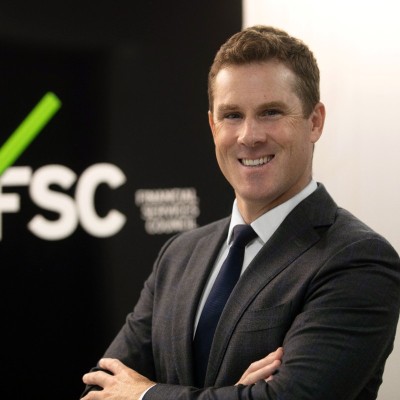
Chief Executive Officer at Financial Services Council
Blake Briggs is the Chief Executive Officer of the Financial Services Council (FSC), the peak industry body representing Australia’s superannuation, funds management, financial advice, and investment platform sectors. In his role, he leads the FSC’s policy, advocacy, and industry engagement efforts, helping shape the future of Australia’s financial services landscape.
With extensive experience across government, industry associations, and financial services, Blake has built a career at the intersection of public policy and financial regulation. Prior to becoming CEO, he served as Deputy CEO of the FSC, where he was responsible for policy and advocacy on behalf of the superannuation, funds management, investment platform, and financial advice industries. He has also held senior government and industry affairs roles at Westpac, the NSW Business Chamber, and the Australian Government.
Blake is a recognised voice on retirement incomes, superannuation policy, and financial services reform. He also represents Australia in the Business at OECD Private Pensions Expert Group, contributing to international discussions on retirement and pension policy. Based in Sydney, he brings a deep understanding of the regulatory, economic, and policy challenges shaping the future of financial services in Australia.


