Inside complaints data: Insights from Heather Gray, Lead Ombudsman Superannuation at AFCA


#5. Co-hosts Sarah Penn and Neil Benson chat with Heather Gray, Lead Ombudsman, Superannuation at Australian Financial Complaints Authority.
Highlights
- Complaints as Feedback: Complaints are valuable for identifying service improvement areas, even though funds aim to minimize them.
- Drop in Insurance Delay Complaints: There has been a notable reduction (39%) in complaints about delays in insurance claims within super funds, indicating successful improvements.
- Importance of Communication: Clear and timely communication—especially during incidents like cyber attacks—is critical in maintaining trust and managing complaints.
- Systemic Issues vs. Human Error: Sarah is surprised to learn that maybe a high proportion of human error-caused complaints is actually right!
- Data Usage: Complaint data is transparent and shared with trustees, allowing for benchmarking and industry-wide improvement.
- Rising Member Expectations: Members now expect higher service standards from funds, paralleling experiences in other industries.
- Clarity in Correspondence: Superannuation communications need to be clear, tailored, and actionable to prevent confusion and reduce complaints.
Guest: Heather Gray
That Super Show
That Super Show is the most downloaded podcast for Australian superannuation professionals. Sarah and Neil cover the issues, debates and decisions shaping the industry - without the spin.
Subscribe to the show wherever you listen to podcasts and don't forget to leave us a rating and review.
- Visit That Super Show website and become a newsletter subscriber
- Email hello@thatsuper.show if you've got a topic you'd like us to cover or a guest suggestion
- Follow That Super Show on LinkedIn
- Follow That Super Show on YouTube
Your Cohosts
Sarah Penn
Sarah Penn is the CEO and founder of Mayflower Consulting, an Australian financial services consultancy specialising in product governance, PDS management, and product operating model design. Her team works with super funds, fund managers, and investment platforms across Australia.
- Connect with Sarah on LinkedIn
- Follow Mayflower Consulting on LinkedIn
- Visit Mayflower Consulting website
Neil Benson
Neil Benson is the global chief product officer at ChandlerCX, where he leads a team focused on intelligent customer messaging for regulated organisations, including superannuation funds, banks, insurers, utilities and public sector organisations. His AI startup, Novagentic, was acquired by ChandlerCX in February 2026.
Mentioned in this episode:
Mayflower Consulting
This episode is brought to you by Mayflower Consulting. If your product team is capable, stretched, and the important structural work keeps getting pushed, that's where we come in. We embed with your team, get the work done, and leave you more capable.
00:00 - Untitled
00:02 - Introduction to the Super Podcast
03:56 - The Role of Complaints in Business Improvement
08:09 - Understanding Superannuation Complaints Trends
13:13 - Investment Fees and Service Quality in Superannuation
21:38 - Crisis Communication Lessons from Cyber Attacks
28:00 - The Impact of Communication on Trust
33:41 - Understanding Superannuation Communication
39:16 - Communication Clarity in Financial Services
Neil Benson
Welcome to that super show, the podcast where we talk all things super from the inside. I'm Neil Benson, CEO of Superware.
Sarah Penn
And I'm Sarah Penn, CEO of Mayflower Consulting. Each week we unpack what's changing in the industry, what funds are wrestling with and how tech and regulation are shaping the landscape.
Neil Benson
Sometimes we bring in expert guests, but mostly it's just us having a real conversation about how super is working and what could make it even better.
Sarah Penn
Let's get into.
Neil Benson
G'.
Heather Gray
Day.
Neil Benson
It's Neil. Welcome to that Super Show. On this episode, Sarah and I have the pleasure of chatting with and learning from Heather Gray.Heather is the lead ombudsman, superannuation at aafca, the Australian Financial Complaints Authority. We discuss whether complaints as a form of member feedback, are really a good thing or something to be avoided and minimized.The recent trends in complaints about superannuation funds, whether April's cyber attack caused a spike in the number of complaints, and how funds should be thinking about continual improvement of their service standards to create great member experiences, especially in difficult situations like benefit claims.AFCA is about to release their external dispute resolution data for financial year 2025 on their data cube, and when they do, I'm sure we'll dive into that in more detail. In the meantime, here's our conversation with Heather Gray. Well, Heather, welcome to that super show. It's great to have you join us.
Heather Gray
Thanks, Neil. Thanks, Sarah. Very happy to be here.
Sarah Penn
We're very happy to have you.
Neil Benson
I thought we might start by asking you to introduce yourself to the audience for anybody who doesn't already know you.
Heather Gray
Yeah, sure. So I'm Heather Gray. I'm the lead ombudsman at aafca, which is the Australian Financial Complaints Authority. So AAFCA has a number of jurisdictions.Effectively, we are set up as the free to complainants, free to consumers, external dispute resolution service.So any provider of financial services, pretty much in Australia, it's gonna be part of their licence conditions that they need to be a member of AFCO and they need to provide that service to their members. So you might come to AAFCA with a complaint about your bank or your insurance company or your financial advisor or your stockbroker.But what we're interested in today is you might come to Africa with a complaint about your superannuation fund. So that's where I come in with my team. So I lead a team of ombudsmen and adjudicators to look at superannuation complaints.Only those complaints that have come all the way through to a decision maker, an ombudsman or an adjudicator.So the vast majority of complaints that come into AAFCA about superannuation do get resolved before they have to come all the way through to a written decision from one of us, which is a good thing.Once AFPA is involved, often our case management team are able to come in, investigate, negotiate, talk things through, maybe do some conciliation, bring people together and get things resolved.But if they can't be resolved, then the role of an ombudsman or an adjudicator is to issue a written determination which basically says this is what's to happen here on that point.
Neil Benson
The data that AFCA publishes about the number of complaints in the industry, the those are external disputes that have been escalated to afca. That doesn't include all the internal disputes that might have been resolved by the financial services firm before it got to afca. Is that right?
Heather Gray
Yeah, that's absolutely right. So the visibility I have is complaints that did not get resolved within the internal dispute resolution processes.So the complainants got to the end of that. They still don't feel that their complaint's been resolved. So they can then come to aafca.People can come to AAFCA kind of regardless if they've got a complaint about their financial firm. In this case, again talking about super funds.But if it hasn't been through that internal dispute resolution process, we would still provide the trustee of that fund the opportunity to do that. Obviously, that's a much better outcome if the trustee can use its own internal resources and get that resolved.But as I say, if it can't be, then that's where EFCA will step in.
Neil Benson
I first got involved in complaints management five or six years ago with racq, who have a banking and an insurance business that is regulated under RG271. It strikes me that complaints and feedback generally is a great source of areas to improve in a business. And so you welcome consumer feedback.You want to find out how your business can improve its products and services in order to grow your business. In this case, superannuation funds. But complaints also get reported.They get scrutinized by the media, by the regulators, and so funds want to minimize the number of complaints. Can you help me reconcile those two points of view? On the one hand, you want all the consumer feedback you can get.On the other hand, too much is going to get you in trouble.
Heather Gray
Well, look, I guess that's right. At the end of the day, no matter how hard any business works, they are still always going to have some complaints.So, of course, what you want to do is minimise those complaints and if you get them, you want to deal with them in a way that's the most effective, so that whatever's happened, you're able to explain that to your customer, your member, whatever it might be, either you did nothing wrong and you're able to explain that, or if you have done something wrong, you're able to provide some compensation or fix it, or send them away in some way that they are happy. I guess the important thing to do, though, is to learn from complaints.So we always say, or at afca, we say, we get people complaining about what we've done and we will look at that. And like any organisation, sometimes people will be unhappy with the way that you've dealt with them.So we use that as a really rich source of feedback and information.So if we can see there's a way that we can do something a bit better than we have been, or if we're doing something thinking that's the most helpful for people, but it turns out for some people it's not, then we can learn from that and we can make changes. So I think it's the same for any organisation and certainly for super funds.So you might be aware that ASIC at the moment is just embarking on a project where they're reviewing the way that superannuation funds look at their complaints data and how they use that data and how they learn from it and the changes that they might make in response to that. So once ASIC's carried out that work and issued a report, I think we'll learn a lot more about that.But from AFCA's perspective, we've got very detailed data that we collect and we've got a member dashboard, which all of our superannuation fund trustees are able to access at any time, and they can just see on that dashboard what's happening with their own complaints. We also publish our data cube, which is available through our website, where people can go in and see what's happening within their fund.They can compare that to what's happening within other funds and they can see that complaint data. And that data cube is updated from time to time.It's currently in the process of being updated, so it's always obviously looking backwards, but that will be updated soon. But we're always looking at themes and trends that we see.So if we do see a fund that's kind of got a bit out of step, so we can see sort of per 10,000 members, what sort of number of complaints you might expect sort of from your average fund.So if we start to see your funds getting more complaints than that coming through, we might be having a bit of a look at that and asking why that's happening.If we're seeing a particular type of complaint that's coming through, that seems again to be out of whack with perhaps what we've seen from that fund before or what we've seen from other funds, we would take a look at that. So we would be reflecting that data back to the fund and saying, look, this is what we're seeing.These are some of the messages that we're getting from complainants who are talking to us about their experience and let's have a chat about that.So we're always doing that, stakeholder engagement, sharing that data and talking it through and just try to be helpful in terms of providing information about what we see.So sometimes we're kind of the canary in the coal mine, I think, because we see we're not only seeing what's happening in Fund A, we're also seeing what's happening in the other funds as well.So sometimes that's not as visible to individual fund trustees because they're kind of only seeing what's happening in their own fund and they don't necessarily say, oh, that's actually out of step with what's happening elsewhere in the industry.
Sarah Penn
I think the trends are really interesting too, with the work that you've done, which, as I understand it, is actually where it first being the canary in the coal mine or perhaps a whole bird cage full of them around death complaint, death handling and insurance claim handling, and the massive spike in both, which I understand has now come down a bit, which is. Which is very nice. But I think it's really interesting how, I guess how far that got before.Not so much from Africa's perspective, because complaints are always a lag indicator that by the time you guys were getting lots of complaints about insurance and death claim handling, one would hate to cast aspersions on one's fellow superannuation management people, but the wheels have pretty much fallen off by that stage. It does seem like the wheels have been well and really bolted back on this year.Complaints, complaints data has fallen quite a bit on the insurance claims, as I understand it in super.
Heather Gray
Yeah, we have seen that trend down, which is obviously really, really, really good to see. So last year we had. Just look at my data here, we had 1,056 complaints about delay with claim.So it's where somebody's applied for an insured benefit from their super fund. But that's 39% down on last year. And so that's obviously really pleasing. Having said that, that's still the biggest category of complaints.So for last year, that was just a whisker under one quarter of all of our complaints. So if I picked up a file at random, one chance in four, that was going to be a complaint about delay with claim handling.So now we're sitting around sort of between 15 and 17%, depending on sort of which day of the week I go in and look at that data and that's. I think that's statistically significant. I like to think that it is and that we're going to see that continuing to trend down.And I know when we talk to funds we hear about things that they're doing to try and improve.So they're bringing new resources, they're bringing in new workflows, they're looking at the way that they're handling these things, they're putting new systems in place and that's bearing some fruit as far as I can tell from when I look at that data.
Neil Benson
Yeah, it's really good to see. I get the impression, talking to some funds, that they knew they had a backlog building up and they have just thrown resources at it.Probably reasonably expensive teams of people to try and bring that backlog down and back under control again. Hopefully they're on top of things now.The steady state stream of benefit claims is something that they can manage with all those additional resources. Because I think sometimes those costs become pretty hard to bear for a superannuation trust.
Heather Gray
Yeah, well, there's certainly a cost, isn't there too? Anything that a fund does to improve services is almost certainly going to involve a cost.And then the question is, what impact does that have on fees? How can things be done more efficiently and effectively?But we're certainly, I think, looking at an environment now where members of superannuation funds have greatly increased expectations of their fund.If you look back even to say five years ago, certainly 10 years ago, we're now living in a world where if you've ordered a pizza, you can look on your phone and it sort of shows you where that pizza is and you can sort of watch it coming down high street and turning the corner and you get all of that real time information and people expect that they will be getting a very high level of service and that translates into their superannuation as well. And of course, service is so important. If we're looking at people's superannuation interests that is absolutely critical for their retirement.People have got those accounts. There's a compulsory sweep out, if you pay every week, every fortnight, every month into superannuation and that's building up for retirement.So people must have confidence that that's being well managed.They must have confidence that if they ring up their fund with a question that they'll get a, a good, robust, sensible, correct answer within a reasonable period of time.And then if something happens, if they become disabled, if they become ill, if they've had a family member pass away who's got a superannuation account, people expect that that will be dealt with promptly and respectfully and helpfully. And if that doesn't happen, then they're much more likely, I think now to complain about that.
Neil Benson
I agree with you 100%. Hello. The challenge I see is whenever a consumer goes to select a new super fund, there are two important criteria on their mind.One is historical performance, you know, returns. What am I going to get the dignified retirement that I really am looking for. And secondly, what are the fees?I want to pay as little as possible in investment fees and administration fees. And I think the quality of member service comes a distant, distant third if it's on the consumer's mind at all.And it's only in these moments of truth when a family member passes away or when they have disablement that they really discover what quality of service that their superannuation fund can provide them. And by then it's too late, they've chosen the fund and now have to live with the consequences and the standards of care that they're given.So I would love members and the press to elevate the scrutiny on service standards so that we can improve them across the board and help them funds justify the fees that they charge. Because I sometimes on the one hand, I think compared to some other retirement systems in the UK or the US we pay too much in Australia.But on the other hand, given the service standards that we really want, we don't pay enough. And again, it's one of those conundrums that we're stuck with.
Sarah Penn
Yeah, I've got to say on the fee front, I think as an industry we beat ourselves up way too much around whether or not we're two bits more expensive than the next one or 30 bucks over a year. It just.The average consumer I don't think actually gives a rat whether they pay, whether they pay $200 or 240 for their, you know, Years worth of super. And I think we actually, I think as an industry we do it to ourselves, right people, super funds do put fees up and nothing dreadful happens.And if you, if you're going to charge 200 bucks and then you're going to charge 220, that extra 20 bucks across half a million people obviously makes an enormous difference to the services you can provide.And I think, I honestly think we, we do it to ourselves and we forget, forget how, how much it matters when, you know, when, when push comes to shove and we don't. The, the investment in technology and stuff isn't always there. I mean death claims is the perfect thing. It's blown out to 5, 000 people.So we'll just throw more people at it because you don't really know what else to do. And we're in a rush. And the disaster, we're on the front page of the news, which is no fun. But you know, you need the investment in technology.You've got to be looking at all the different parts of it. Where's your governance around it, where's your reporting, what's the technology? How does it all fit together to get a good, to get a good result?And I think the focus on complaints is going to be out of ASIC is going to be really interesting, especially because they did a report about incidents and breaches maybe last year, I can't quite remember the date, but, but half of all incidents and breaches Super Fund said it was human error. Now it can't be human error half the time, it just can't.That means it's systemic because how, how the hell can you just blame all the individual people that accidentally buggered it up on the day and then go, well, it's human errors, there's nothing I can do. But then when you look at it at a systemic level, there's this big thing of, you know, how do you fix that?And I think that's the thing with complaints too is, you know, how do you take that information?And I think having it across funds is so useful as well because then you can see that I might have only had two of that sort of complaint compared to another fund. But if everybody's saying it's human error,.
Heather Gray
Then, well, look, it's a really interesting point that you raise, Sarah. And one of the obligations that AAFCA has is to consider when we see a complaint, to consider whether there's a systemic issue behind it.And so under our rules, a systemic issue is one, it's an issue that we've seen in the course of looking at a complaint that we have reason to believe might affect some, at least one other person than that particular complainant. So that's quite a broad test that you can see.
Neil Benson
So we, it's very low bar, just one other member and one or more.
Heather Gray
But if we look at something that's happened to a person and the, the person who's looking at that file thinks to themselves, well, if that's happened to this complainant in these circumstances, I wonder if that's happening to other people as well. So everybody who picks up a file and is looking at it, one of their obligations is to keep that in the back of their mind.So if somebody sees that that's a possible issue, we refer that straight through to our systemic issues team and they will then look at that. So we kind of err on the caution on side of caution when we refer through to that team and they will then look at it.So sometimes they'll look at it and say, well, that, yeah, look, we can see what's happened here. That's not, I'm not concerned. But sometimes they'll look at that and say, yeah, that might be something that's affecting other people.And then we'll write a letter to that fund and we'll say, well, this is what we've seen, this is what we're concerned about. We think possibly there's a systemic issue here.And here's a whole list of questions that we would like you to answer so that we can form a view about that.And then if having had that response, maybe a bit of toing and fro ing so that we're confident that we've really understood what's happened there and what's going on. If we think there is definitely a systemic issue, we're obliged to, and we do report that through to the regulators.So the regulators will then have that information and can decide whether they want to investigate further, whether they want to take enforcement action, what they might want to do about it. So that's kind of, I mean, that is an important stopgap.
Sarah Penn
How often do they get referred through?Like, I can't imagine you've got a percentage off the top of your head, but is it infrequent or frequent that something comes up and your people look at it and think, maybe that's systemic.
Heather Gray
Look, it's, that's happening every day by any means. We're not writing to the regulator every day and saying, here's information, systemic issue.But certainly over the course of the year, There will be a number of them and some of them are a bit contained, I suppose, where perhaps we've seen something and we think that that's affected other people as well. And once we've corresponded with the fund we find out, yeah, that was actually like some glitch with their system and that's affected 2,800 people.The fund's already aware of that and they've already rectified it or whatever. So that's something that you can say, well that's happened, but it's fixed now and we understand why that happened.Sometimes they're broader things that certainly do need additional attention and they're the ones, I suppose that when they get to the regulator that that will get some attention to see whether any additional activity is required in, in order to fix that.
Sarah Penn
Are there any themes around those or is it tends to be, you know, different.
Heather Gray
Different every single time, different things. So I often get asked this like, you know, is there something magic, something all the funds are getting wrong?Like is there, is there something the industry. But the point you make, Sarah, about human error, I take your point there.Having said that though, quite a lot of things that go wrong, it genuinely is human error because a lot of what happens in the administration of superannuation funds is of course kind of straight through processing. It's automated.The administrator's got a system and that works pretty well and everything goes through and the administration system is set up so that it's doing the right thing.At each point where we get a problem is where somebody's circumstances are a little bit different so it doesn't quite fit within the automatic system and it's got to be pulled out for manual processing.So maybe the system will work perfectly if you're an Australian resident and it knows what to do and everybody gets the right thing coming out the other end. But if you're living in some overseas jurisdiction. Botswana, yeah.Or an overseas jurisdiction that perhaps is a high risk country for the purposes of any money laundering and counter terrorism financing rules or whatever, that the system spits that out for manual processing. So that's where there's the opportunity for that human error. So obviously it's not always human error that's a problem.Sometimes it's the system isn't working quite, quite well enough or that there's not enough resourcing and therefore everything is taking too long and deadlines are being missed because of that.But sometimes it's just because of that that somebody's got a slightly unusual circumstance or there's Just something about what they're trying to do or what their query was or whatever it is, and the person who dealt with it hadn't dealt with that before and they've made a mistake or they just didn't, you know, they just didn't quite know what the correct way of processing that was.
Neil Benson
Heather, I wanted to touch on the April event, which was a coordinated cyber attack against a number of major superannuation funds. Just wondering if AAFKA has seen a flow on in complaints arising from that event.Did members end up contacting AFKA regarding their accounts being compromised or just even their systems being down? They couldn't access their member online portal. Did you see a spike in complaints?
Heather Gray
Yeah, we saw a small number of complaints, not. Not a. Not a huge number of complaints by any means.And the complaints that we received were largely people who were annoyed that that had happened, which is not really something that AFCA we can deal with. We're really there for people who've suffered a loss because of some error or something that's happened that shouldn't have happened.So we were all annoyed, reasonably.And of course, the funds who were affected, some of them had to close down access through their portals while they figured out what was going on, made sure everything was secure and took the steps that they needed to take. So there was a period when people tried to access their online account and they couldn't do that.And they were seeing in the media about this and they were not unreasonably, very anxious about what was happening and then found that they couldn't get into their account and were confused and upset and again, not unreasonably so.However, I mean, the good news for that cyber attack was that a very small number of accounts were actually accessed and a very small number of people had money taken from their accounts. And in that situation, all of those people were compensated for that by their superannuation funds.So it was obviously not a great thing to have happened and a lot of learnings to be had from that. I think one of the most significant learnings was around communication.So funds varied in how quickly they contacted their members, what they said to their members. So some funds were affected and the majority of funds weren't affected.But of course, when the community generally looked at the media, the message that they simply got was like, there's been a huge cyber attack on Australia's superannuation system. So everybody was anxious about what was happening. So some funds that weren't affected contacted all their members and said, it's all right.We're not one of the funds that was affected, but we're definitely having another look at our security. Other funds didn't do that. So there wasn't a coordination, I guess, around the industry in terms of what communications were going on.And I think that's one of the learnings probably from that system to think about how that sort of messaging can go out to the community in a way that's a little bit more coordinated and a little bit more helpful. Helpful for people.
Neil Benson
For a piece of research last year I joined 15 superannuation funds, so I'm still a member of both of them.And funnily enough, when those communications started to come through about the cyber attack, it was the funds who felt they weren't under attack that were communicating nice and early, and it was the funds that were still trying to button down the hatches and shut everything down and make sure that they weren't vulnerable. There were delays in communications from those funds, and that's kind of understandable.I can imagine in the middle of a crisis when you're trying to figure out what's going on, you might delay communication by a couple of days until you can put an accurate, correct message. Whereas the funds that knew their systems were unaffected were able to respond much quicker.
Sarah Penn
So, yeah, I've got to say on that. I know from experience that it just. It doesn't matter if you don't know what's going on. You have to tell people.You have to say, we know this has happened. Even if your message is, dear Member, something terrible has happened. We're not sure of the level of impact yet. We're still working it out.We'll tell you as soon as we know what is going on. You have to do that.You cannot wait until you've got something concrete to tell people because in the meantime, all hell breaks loose, especially these days. You know, when I learned, it was during 9 11, which is bloody long time ago now.And I remember we were sending daily emails and I remember saying to my boss at the time, we don't have anything new to say. Why are we telling people every single day that we don't have anything new to say?And she said, because you need to understand that if you don't communicate very, very regularly in a crisis, people really feel like you're not supporting them properly. And it doesn't matter if you don't have anything new to say to them. You still have to go out and say, today is Thursday.This thing happened on Monday. Our update for today on day four is Nothing has happened today. When something has happened, we will tell you.Yeah, but you have to, you have to go out even with that. And it's such a.When you're on the inside it feels like absolute overkill, but when you're on the outside and on the receiving end, it feels like the right amount of communication.
Heather Gray
Well, I guess this is why Dan Andrews came out every single day during it is a long period in the pandemic, same outfit and, and provided an update even though a lot of those updates were in fact not overly substantive for that exact reason. But look, communication is part of most complaints that we get about communication will be in there somewhere.So perhaps there was no communication and then somebody's drawn inferences from that and gone off, you know, on a bit of a tangent. Or maybe the communication just wasn't very clear. Communication is just always in there as something that has contributed to that complaint.It might not necessarily have caused it, but it's an element of it.
Sarah Penn
Yeah, it's an easy way to make a bad thing much worse if you communicate it badly. I mean, that's the thing with most complaints is.Well, I think is as soon as you become aware of it, if you start communicating well, then there are very few that will turn into a full blown issue that you have to deal with. I mean, occasionally it's pseudo unavoidable. You say no to someone's insurance claim and they're very upset.There's probably no nice way to say that, but in most circumstances I honestly think that good communication sorts out a whole lot of stuff before people start getting very angry at you.
Heather Gray
Yeah, look, it does tend to. And poor communication will affect trust.So that's what we see over and over again when we go through a file where we've got all of the correspondence, we've got the phone calls, we've got everybody's submissions, who said what to who when copies of all those emails and things. And we read through that, you can sometimes sort of see the point at which that trust was lost.So the complainants, you know, been told, well, we'll get back to you within 48 hours or whatever.And then nobody did get back to them within 48 hours or they've asked a question and then the response that they received was, you know, not a comprehensive response or not a helpful response, or in fact responded to a question quite different from the one that was asked. Or they hold something on Monday and then on Wednesday they get a thing saying something different.All of those sorts of things that can happen and then that affects trust. So now the person's thinking, well I really can't trust anything that I'm being told here.And then it's much more likely that that will escalate into a complaint and that it will come through to, to afca.Because if people hear, people hear good candid explanations for things, even if something has gone wrong, if they get a good clear explanation about that and that's timely and undertakings about when you'll hear a response or when somebody will call you or whatever or met, then that does build trust. And people are much less likely, I think, to want to continue with the complaint and have it come through to us.
Neil Benson
Heather, I wanted to ask you about another massive spike in complaints that we saw recently around the collapse of a couple of managed investment schemes, Shield and First Guardian.I think those are under AAFCA's Investments and Advice jurisdiction, which I presume is not part of the superannuation jurisdiction that your team looks after, is that right?
Heather Gray
Primarily those complaints are about the investment advisers, but also, as you'd be aware from the media, those funds available on the platforms of a couple of trustees. So there are some superannuation complaints related to that as well.
Sarah Penn
Okay, that's just awful, isn't it?
Neil Benson
There's a couple of overlaps in some of the categories like life insurance. Does that mean life insurance outside of superannuation? I presume it does.And things like investments and advice can be provided both inside super and outside Super. So curious to know whether those impacted superannuation funds.
Heather Gray
Yeah, that's right. Most investment advice though is provided under a different AFSL to the trustees.So most people who are complaining about financial advice that they've received, they're actually complaining about a financial adviser that is not the trustee and that is dealt with, as you say, in our investments in advice jurisdiction.
Sarah Penn
You don't see many advice complaints where the advice is provided by the trustee? I don't think.
Heather Gray
No, we don't see much at all.
Sarah Penn
So interesting I think, I mean the whole advice in super, who should be allowed to do it, under what circumstances, blah blah, blah, blah, blah. Yeah, if everyone's happy with the advice they're getting from their super fund. I don't know, I think that says something quite strongly.
Heather Gray
Well, I think it's more that their funds are not giving advice. So some of them are giving some general advice.But the sorts of things that my colleagues in the investments and advice team are saying is the financial advisor advised somebody to put their self managed super fund money into this property development up on the Gold coast or to do something, and then that's what's being complained about. But there's the whole quality of advice review and then there's the outworkings of that and changes that are coming through.So we'll just have to see how that works its way and how that affects what we see in the future.
Neil Benson
So when a consumer comes to you with a complaint and it might be about a large organization, you know, a big banking group, how does your team figure out which AFSL the complaint relates to? When there might be multiple inside a large group, whether there's an advice arm or a banking arm or an insurance arm?I presume somebody, your team's got to figure out which entity the complaint is actually about.
Heather Gray
Yeah, sure. And people won't necessarily know and why would they?So you might just be, as the consumer, you're getting documents which probably just have a business name on or they have the name of a product on or something. So people don't always know, but they'll have a crack at it and we'll just take it from there.So we've obviously got our own knowledge about which products are provided by who, and we've got a pretty good understanding of that. And so, yeah, we'll give that our best shot. So if we open a complaint against particular entity, and that's actually not the right one.No, they will tell us. They will tell us that they'll swiftly.
Sarah Penn
One assumes they will swiftly.
Heather Gray
They will swiftly let us know. But yeah, sometimes it's a bit of a forensic work, so to be done.So the complainant will send us in their documents and we'll just have to work through those and figure out who's actually being complained about here. Who is it who's said to have done something wrong? But yeah, we're pretty good at doing that.
Sarah Penn
Lots of practice, I imagine.
Heather Gray
We have had a lot of practice with that. So last year we had just over 100,000 complaints at AAFCA across all of our jurisdictions.So that is a lot of practice figuring out who's being complained about.
Neil Benson
So, heather, we're down 16% on superannuation complaints generally. And hopefully your team has another very quiet year this year with far fewer complaints in superannuation.What pieces of advice would you like to leave super professionals with in order to. To improve their member services, reduce the number of complaints?What are the kind of key trends and topics you're seeing at the moment that funds could address?
Heather Gray
Yeah, well, it's all about service, I think, which is what you've been raising with me, it's all about service, I think. So delay with claim handling being our sort of top issue, really. That's a service issue, isn't it? That's.I've made a claim for this benefit and I expected that that would get worked through and a decision would be made within a reasonable time. That didn't happen. I mean, that's really a service type of issue.So communication, which I've already spoken about, communication and disclosure and service, so very much, I think, meeting or going some way towards meeting member expectations around all of that. So if somebody receives a letter from their fund, that just needs to be as clear as it possibly can be.And all the funds are really trying hard with that. But we frequently see correspondence that's been sent out, which is unclear.Maybe there's some sort of a call to action in there for the member, but it's not sufficiently well highlighted. We might see a letter which comes out saying, we've made some changes to insurance.For most people, it's not going to make any real difference to you, but click here to get more information. Nobody clicks there because we do, but. But then of course, there will be people who didn't click there because they didn't have any reason to.They didn't understand the circumstances that this might be significant for them. So there needs to be much more attention to things like that. So it can't just say, click here for more information. Needs to be absolutely clear.You know, you must click here and have a look because you might be affected and this might, you know, be a change for you that might have this significance for you. So explaining those things, tailoring the correspondence that comes to people.So we'll often see people have just received generic letters from the fund, even response to questions that they've asked, but it's not tailored to their own circumstance.So they will be effectively misled by that because maybe what they were told was relevant to 95% of the fund's members, but it wasn't quite the same for them because many people are in.They're in a division of a fund that's like a legacy division or, you know, it's a former corporate plan that's moved into a master plan and they've got different terms and conditions that apply to them. They've got. They've got insurance which has got its own sort of bells and whistles.So I would say, yeah, that communication and tailoring and really, I think just recognizing that the superannuation system is incredibly Complicated at a high level, it's very simple. It comes out of your pay, it goes into superannuation, it sits in an account, it gets invested. When you retire, there's that money for you.So that's really simple and easy to explain, but as soon as you get below that surface, incredibly difficult. So like insurance, every fund's got its own insurance contract with its external insurer.All of those have slightly different definitions, slightly different terms and conditions, slightly different rules about eligibility. Very difficult for people to understand. Indeed, even for professionals working in that field, it can be really difficult.So it's always a conundrum, isn't it? How do you explain something that's really, really complicated in a way that people are able to understand?But I always feel like stepping into the shoes of the person that you're writing to and just really saying, well, what would this person, what would this person need to know in this situation? So I'll give you an example. Say somebody whose insurance has lapsed within a fund because contributions had ceased.So under the terms of the insurance in that fund, the insurance will say, say 30 days after or 60 days after the last contribution was made and then maybe contributions start up again.So now the insurance has sprung back to life and the fund writes a letter to that person and says, well, your insurance has now been reactivated, but maybe that reactivated insurance has now got a pre existing condition exclusion on it.
Neil Benson
Oh, yep.
Sarah Penn
Yeah, that happens a lot. Yeah, yeah. The reinstatement is often at a much.
Heather Gray
Reduced kind of correct thing. So. And again, maybe that just says like, you know, the terms and conditions might be different. So click here for more information.But that's how people, they. People will not understand those things. So. And there's no reason for us to expect that.If you're not working in the financial services industry and dealing with these things day by day, why would you understand all of those issues? So I think finding. Finding ways to better communicate, to better explain things to people, to build that trust through providing really good service.Even as you say, Sarah, or if it's just to contact somebody and say, look, we're still looking into it.I don't have any update for you other than just to reassure you that we're looking at it and we'll come back to you as soon as we can, all of those things will make a big difference.
Sarah Penn
Great.
Neil Benson
Well, thanks for those words of wisdom, Heather. I really appreciate it.I'm sure everybody will reflect on their own communication style and frequency and the empathy and personalization that they give to their members.I think it's really critical that it is such a complex field and Sarah's got an entire career built on clarity of communication of complex topics to superannuation of consumers. So, yeah, it's, it'll continue to plague us, I think, for some time to come until everybody in the country's got the RG146 training.
Sarah Penn
I'm not sure that helps people. I've not, I managed to never, ever.
Heather Gray
Do RG146,.
Sarah Penn
But I sure as hell do understand good, clear communications.And it's funny what you say about the reinstatement clauses, Heather, because I have just been recently writing some PDFs for a couple of funds and writing the insurance guides and getting clarity around exactly what reinstatement means and what they do get and what they don't get even in the PDF is it's complicated, it's not straightforward even with a fairly basic product. And that wasn't, I've got to say, until a few months ago that was not something even, I wasn't even aware of that.I thought it just, you know, you stopped paying and then you start paying and it keeps going and that's not what happens at all.
Heather Gray
It's never that simple, is it?
Sarah Penn
No. No, it is not.
Neil Benson
Heather, thanks so much for joining us. I really appreciate your time on that super show today. Not at all.
Heather Gray
It's been a pleasure. Thank you both.
Sarah Penn
Thanks, Heather.
Sarah Penn
Well, that was the delightful Heather Gray along with myself and Neil Benson. It's been wonderful to have her on the show. She's such an interesting person and always brings such a considered view. She is a lawyer, after all.To the proceedings. And that's it for this week's that Super Show.Next time it'll be just back to Neil and I as we get back to discussing everything we like and don't like about superannuation in Australia. And of course, there is, as always, much to discuss. If you'd like to get hot of Neil or I, you can do so via that super show webpage.Or of course, you can always contact us via LinkedIn. Look forward to talking to you all soon. Bye bye.
Neil Benson
Thanks for listening to that super show. We hope today's episode gave you something useful to take back to your team.
Sarah Penn
If you're thinking we should talk, we'd love to chat.
Sarah Penn
You can book a meeting with either.
Sarah Penn
Of us via the link in the show notes.
Neil Benson
And don't forget to follow the show, share it with a colleague and drop us a line if there's a topic you want us to tackle.
Sarah Penn
Catch you next time on that super show.
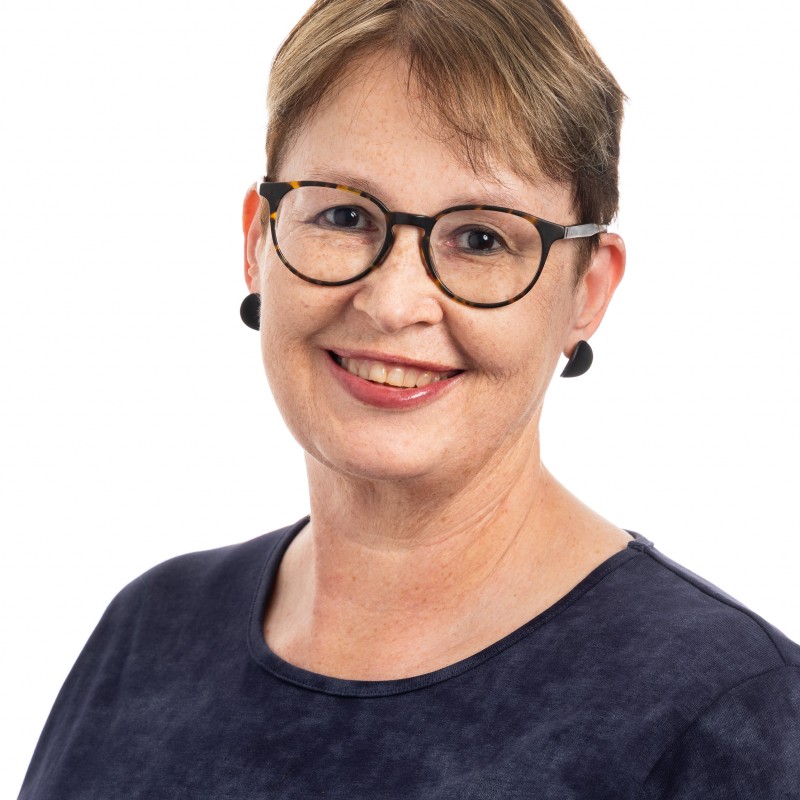
Lead Ombudsman, Superannuation at AFCA
Heather Gray is one of Australia’s most experienced superannuation and financial services lawyers. In her most recent role as Lead Ombudsman, Superannuation at AFCA, she led a team of decision makers focused on ensuring that superannuation complaints were resolved fairly and effectively. She is a frequent speaker at superannuation conferences and seminars, and has been actively involved in consulting with Regulators and Government on matters of superannuation policy. She is deeply committed to contributing to the superannuation industry and to helping build a future in which all Australians can enjoy a safe and dignified retirement.


